Marrakech Photography Spots: 10 Locations Worth Your Film and Time
Ben Youssef Madrasa
Marrakech is a sensory overload.
You step out of your riad and within thirty seconds someone's trying to sell you a tagine, a moped's missed your shoulder by inches, and the light bouncing off a spice stall is doing something you'll spend the rest of the day chasing.
It's a genuinely difficult city to photograph well not because the subjects aren't there, they're everywhere, but because there's too much of everything at once and locals will tell you to put the camera away.
Here are some of the spots that I photographed and some I didn’t get the chance to but would advise getting.
Want to fit these into a full trip? Here's my 4-day Marrakech and Casablanca itinerary.
Jemaa el-Fnaa at Golden Hour, Not Midday
Everyone photographs Jemaa el-Fnaa but me, so I am showing my good friend Cliff’s image. I’d advise checking out all his feed on Instagram as it’s superb.
I didn’t go as I had early morning tours booked and to be honest didn’t feel comfortable walking all the way from the top of the Medina where my Raid was with my camera at that time by myself.
I would avoid shooting this image at 1pm when the light is flat and harsh and the square is at its most chaotic. Come back around an hour before sunset instead. The storytellers, snake charmers, and food stalls are setting up, the light goes warm and low across the square, and the minaret of the Koutoubia Mosque catches it beautifully in the background.
The Souks of The Medina

The Souks
In the Medina
This is where a rangefinder earns its keep. The souks are narrow, crowded, and constantly shifting between deep shadow and shafts of hard light coming through gaps in the reed roofing. I found zone focusing far more useful here than trying to autofocus through moving crowds — pre-set your distance, anticipate where someone's about to step into the light, and wait. Souk Semmarine is the busiest and most photogenic; the smaller dye and leather souks nearby are quieter and give you room to actually compose.
Bahia Palace
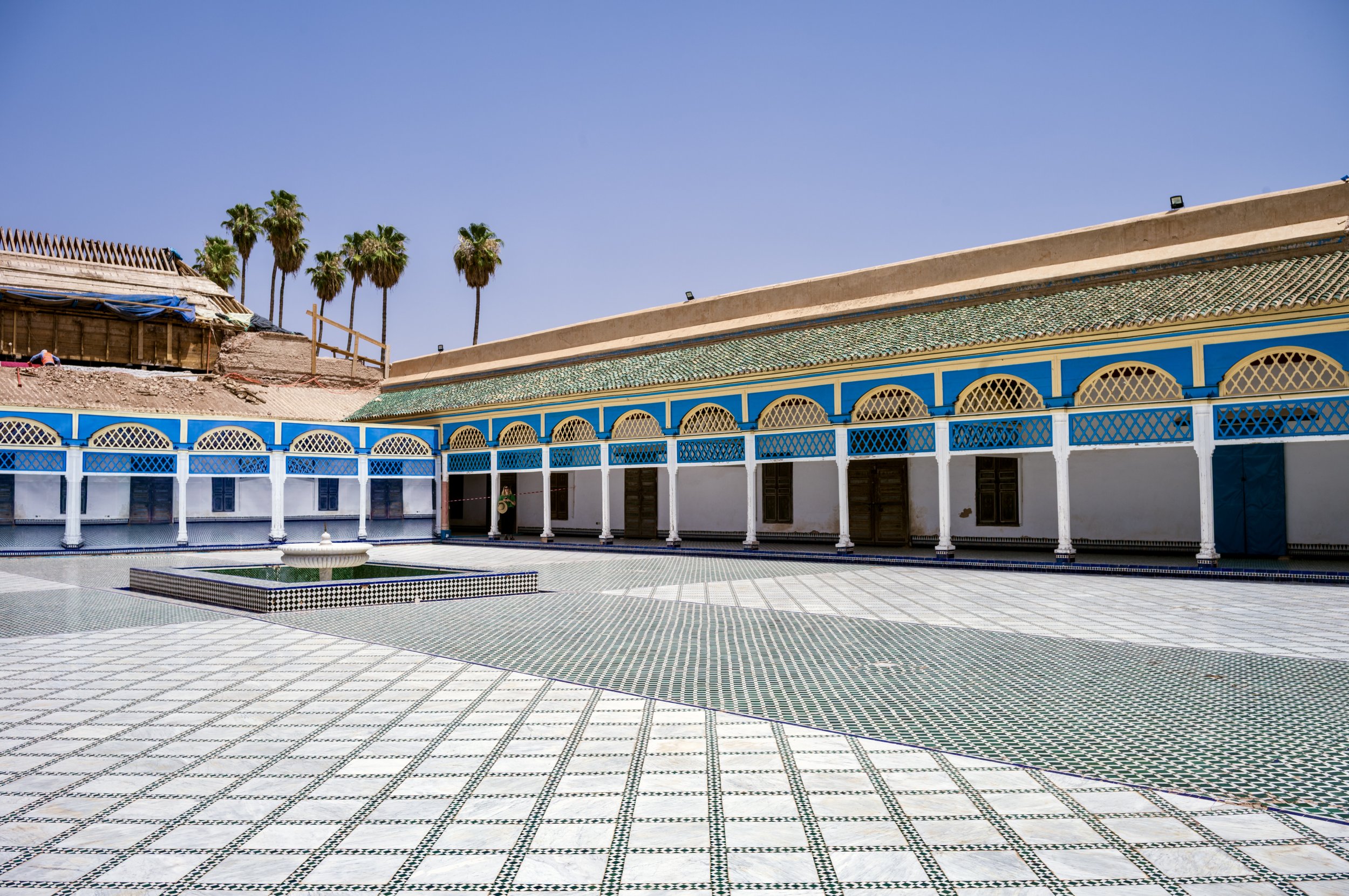
Bahia Palace
The damage you can see was caused in the earthquake in September 2023.
If the souks are about chaos, Bahia Palace is the opposite, a place to slow right down.
The zellige tilework, carved cedar ceilings, and courtyard gardens give you clean, graphic compositions that are hard to get elsewhere in the city. Go early. It gets busy with tour groups by mid-morning, and empty courtyards make a real difference to how these shots read.
This was a spot I wanted to photograph, as I had planned this to be an image I got printed but the damage caused by the earthquake in 2023 (as you can see prevent this) and is currently still under construction as of 2026.
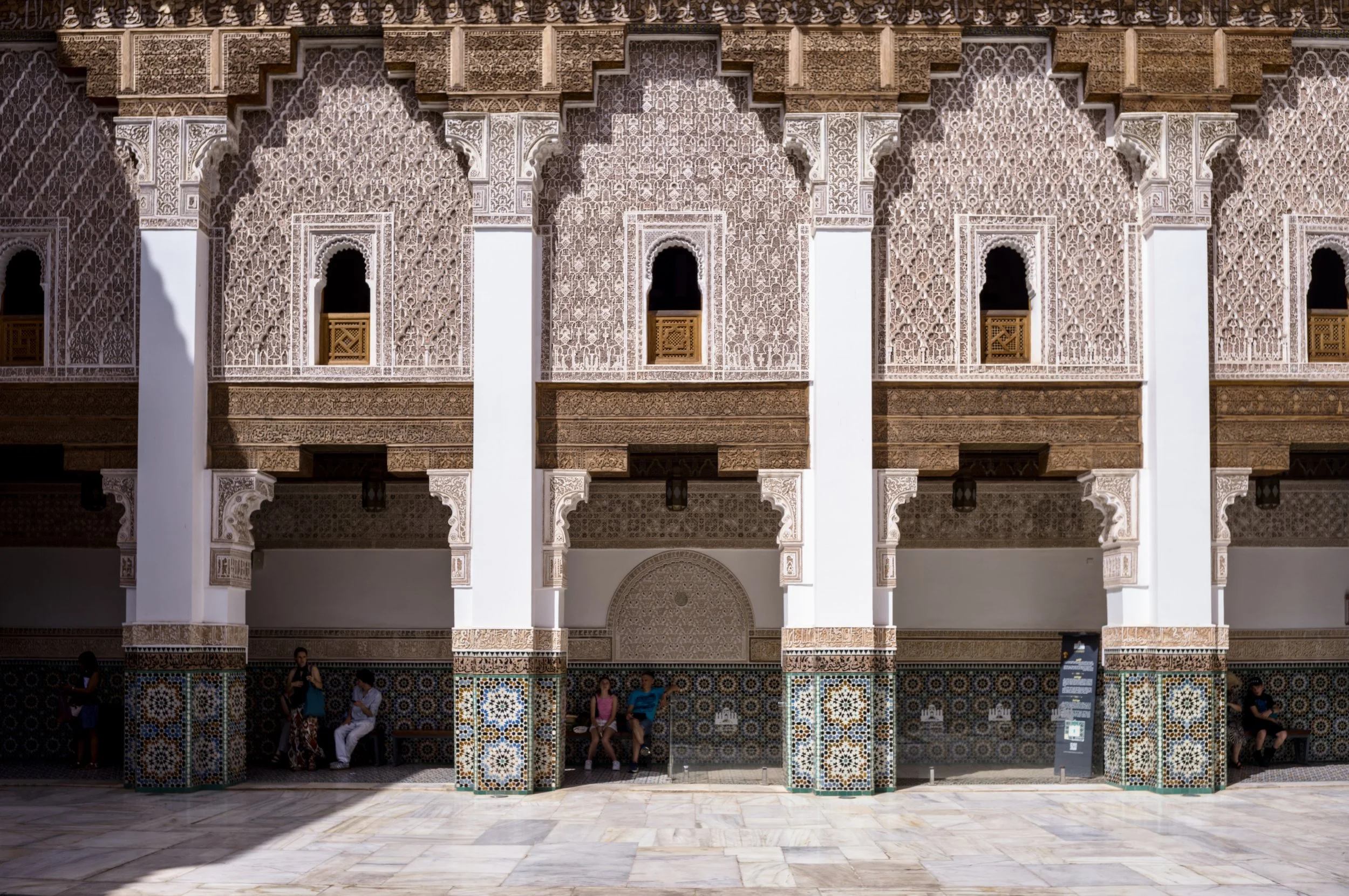
Ben Youssef Madrasa

Ben Youssef Madrasa
This was one of my favourite locations I visited in Marrakech.
The old Islamic college is one of the most photogenic single buildings in Marrakech, there is a central courtyard framed by carved stucco, geometric tile work, and a reflecting pool that mirrors it all back at you.
It’s worth exploring further too, going upstairs to visit the room where the studying would happen.
Just be warned it's popular with photographers for a reason, so if you want it without a queue of other cameras in frame, be at the door for opening.
Majorelle Garden

Close up detail of the Cubist Villa designed by French architect Paul Sinoir
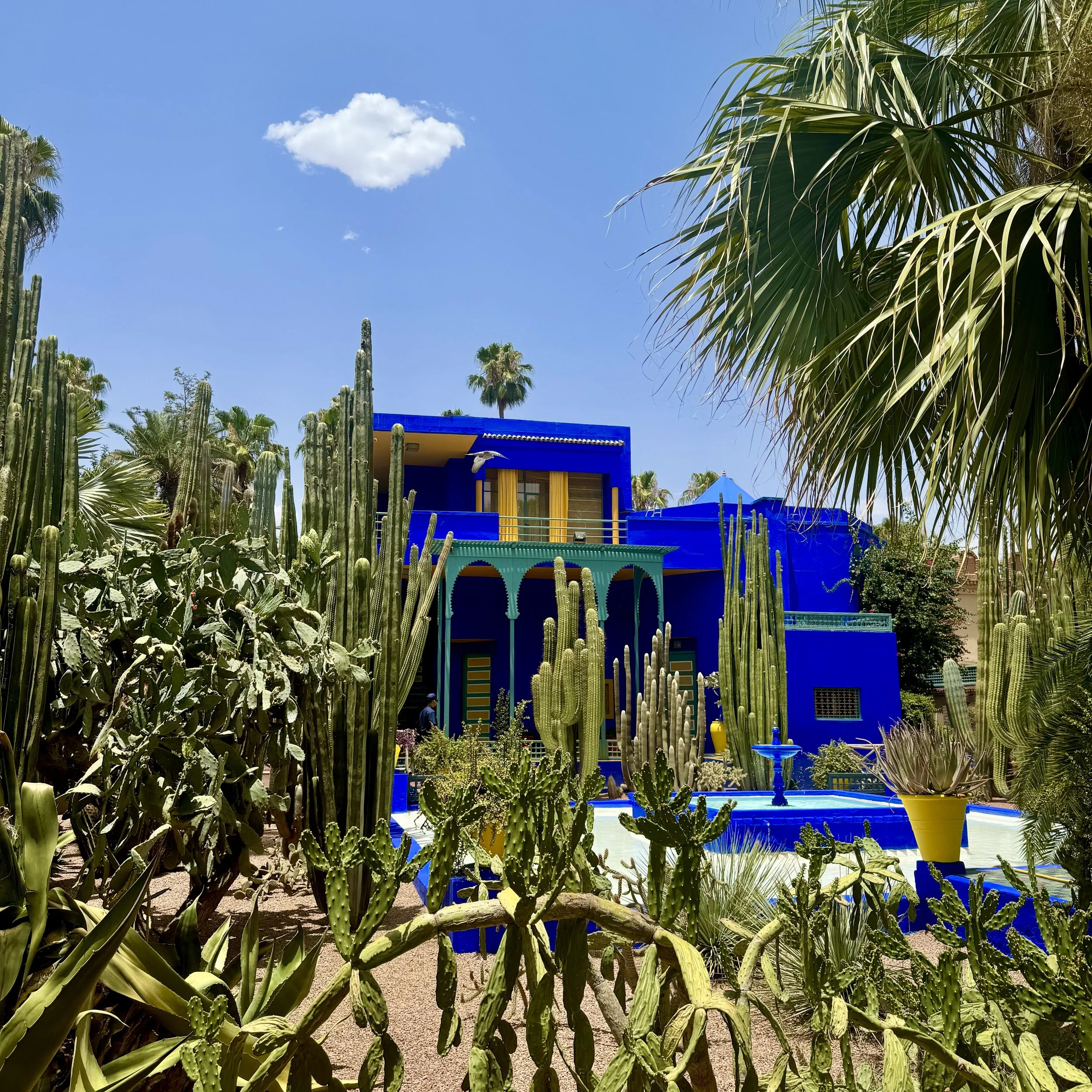
Cubist Villa designed by French architect Paul Sinoir in the 1930s
I'll be honest this one's divisive, and it's not for everyone.
It's manicured, it's busy, and it's a long way from the raw energy of the Medina, but the cobalt blue of the buildings against the cacti and palms is a genuinely unique colour palette you won't find anywhere else in the city, and it photographs beautifully.
Go for the blue walls, not for an authentic Marrakech experience it isn't trying to be one.
Rooftop Terraces
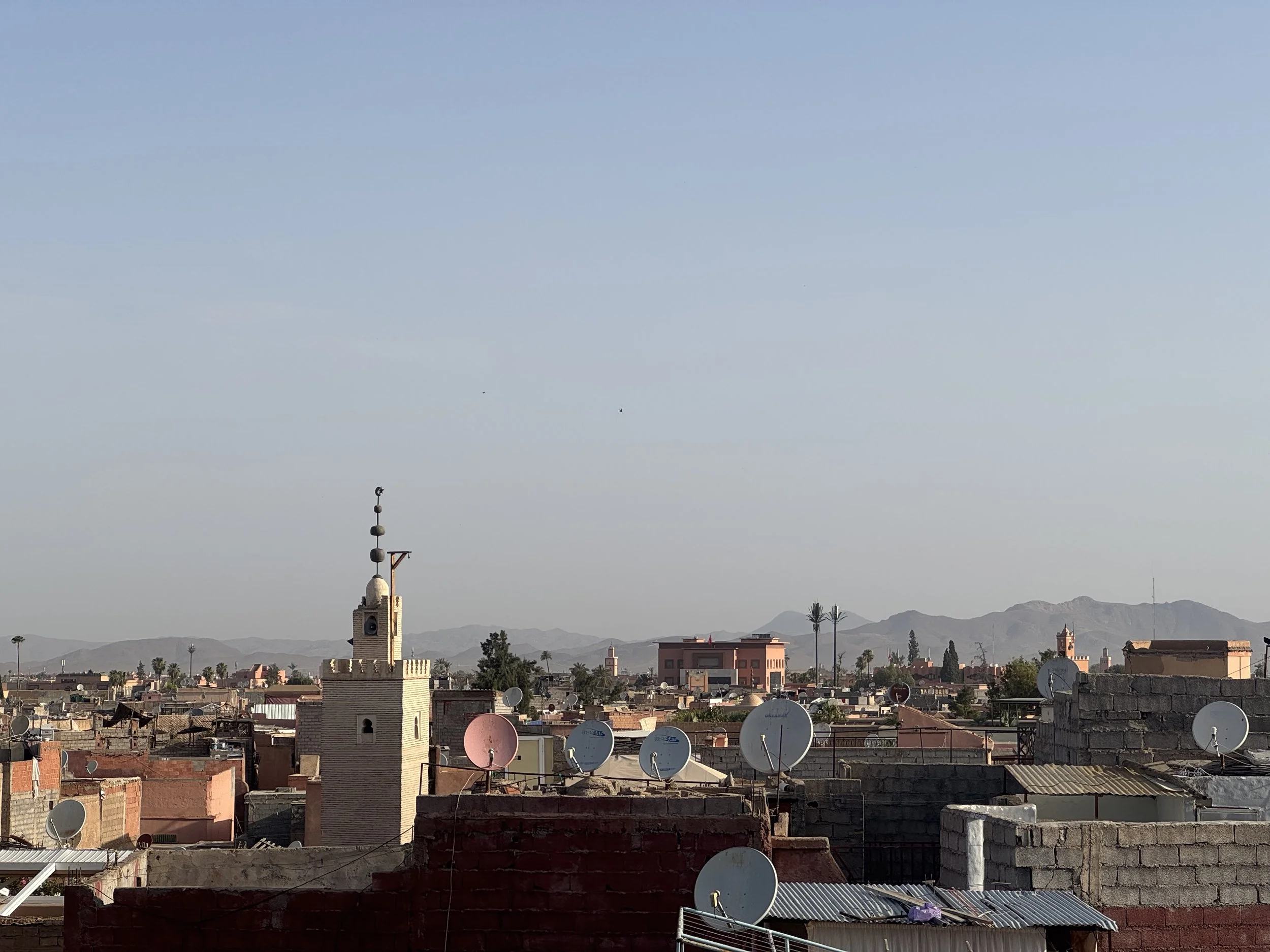
Rooftops of Merrakech
Some of my favourite frames from this trip weren't taken in any famous location at all they were shot from the riad rooftops and something I’d recommend is taking a video as the call to prayer rolled out across the city at dusk.
Ask your riad if you can access the roof in the evening.
You'll get layered rooftops, satellite dishes, storks nesting on old walls, maybe even some mountains and a skyline that barely features in postcards of the city.
El Badi Palace
I never had this on my list to do as it is now largely ruins.
El Badi Palace has a stripped-back, textural quality that contrasts nicely with the ornate interiors elsewhere in the city. Storks nest on the crumbling walls, and the scale of the empty courtyards makes for strong wide shots, especially in harsh midday light when other locations are unshootable.
Again, be warned this is another instagram hot spot for influencers so plan your visit bearing this in mind.
Dyers' Souk (Souk Sebbaghine)
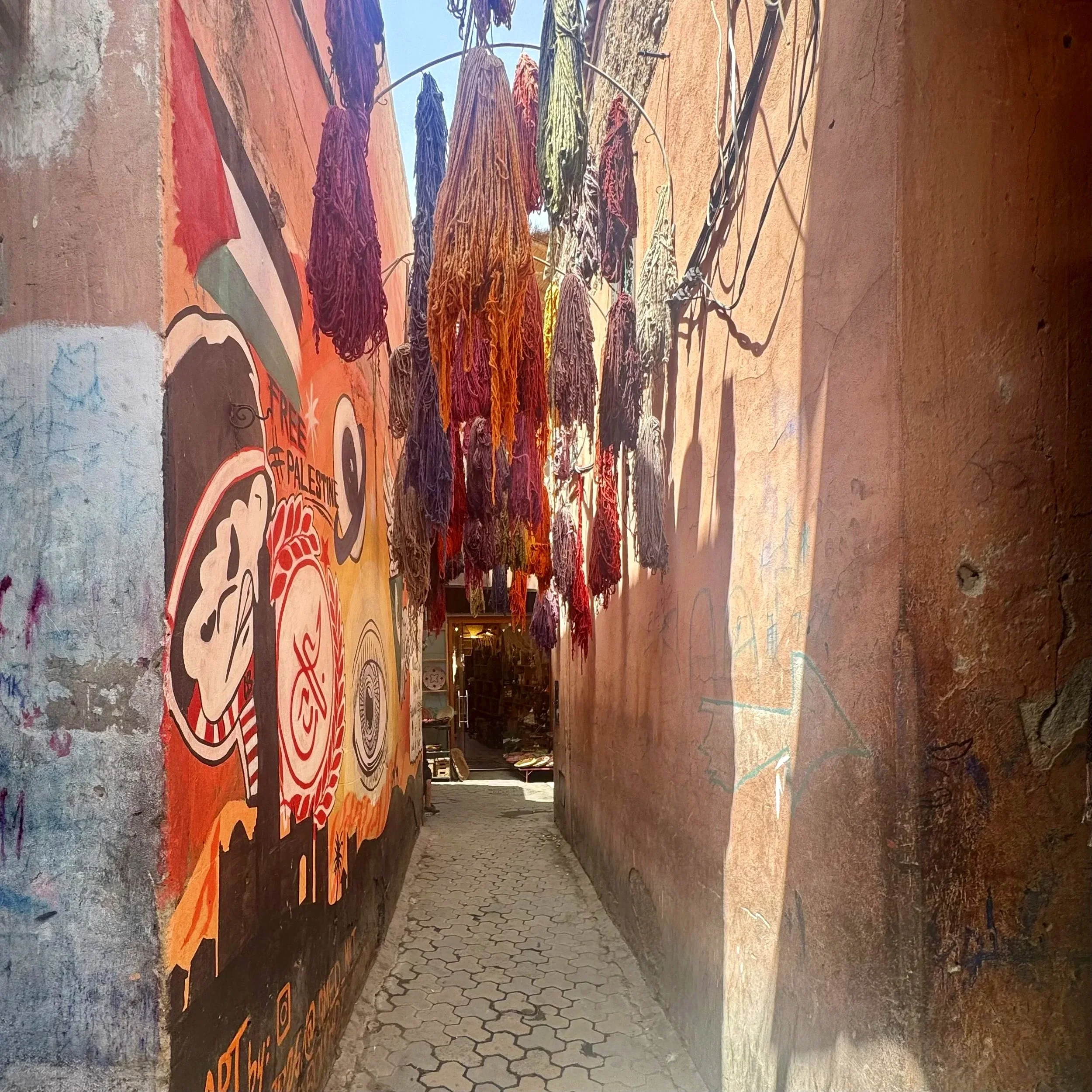
Colour everywhere
This is a great location to visit if you want some colour in your images
Vats of dye in impossible colours, wool hung out to dry overhead, and dyers working with hands stained every colour imaginable.
It's a small, specific corner of the Medina but a genuinely rewarding one for anyone shooting colour.
The workers here are very friendly too and will show you how the dyes are made and used to colour the wool.
The New City (Gueliz)
A lot of photography in Marrakech stays inside the Medina walls.
Gueliz, the newer part of the city, gives you a completely different register, neon signage, cafes, a more contemporary street life. Sadly this was one area I din’t research and missed out on.
From the research I’ve carried out since, it's worth an evening if you want images that show the other side of Marrakech.
Menara Gardens
If you want the Atlas Mountains in frame, Menara Gardens is the easiest place in the city to get them with olive groves, a still reflecting pool, and on a clear day, snow-capped peaks in the background. Best early morning before the haze builds up.
A Few Practical Notes for Photographers
Heat matters more than gear. I shot this trip on a Leica M11 and genuinely wished I'd brought my M6 instead the heat made we wish for something a little more forgiving to carry all day, and I'd pack lighter next time.
Learn "La, shukran" ("no, thank you") it's the single most useful phrase for moving through the souks without getting pulled into every stall.
Ignore unsolicited "guides." Politely decline and keep walking; it's the easiest way to avoid being led somewhere you didn't intend to go.
Plan routes from your riad rather than wandering. The Medina's alleys are genuinely disorientating, and having a rough route in mind saves you backtracking through the same souk three times.
Next time, I'd add the Atlas Mountains and an evening in the Agafay Desert to this list something I regret skipping on this trip. If you're planning the wider route, my 4-day Marrakech and Casablanca itinerary covers how I split the time between the two cities.