Osaka Travel Guide 2026: Best Things to Do, Eat & See for First-Time Visitors
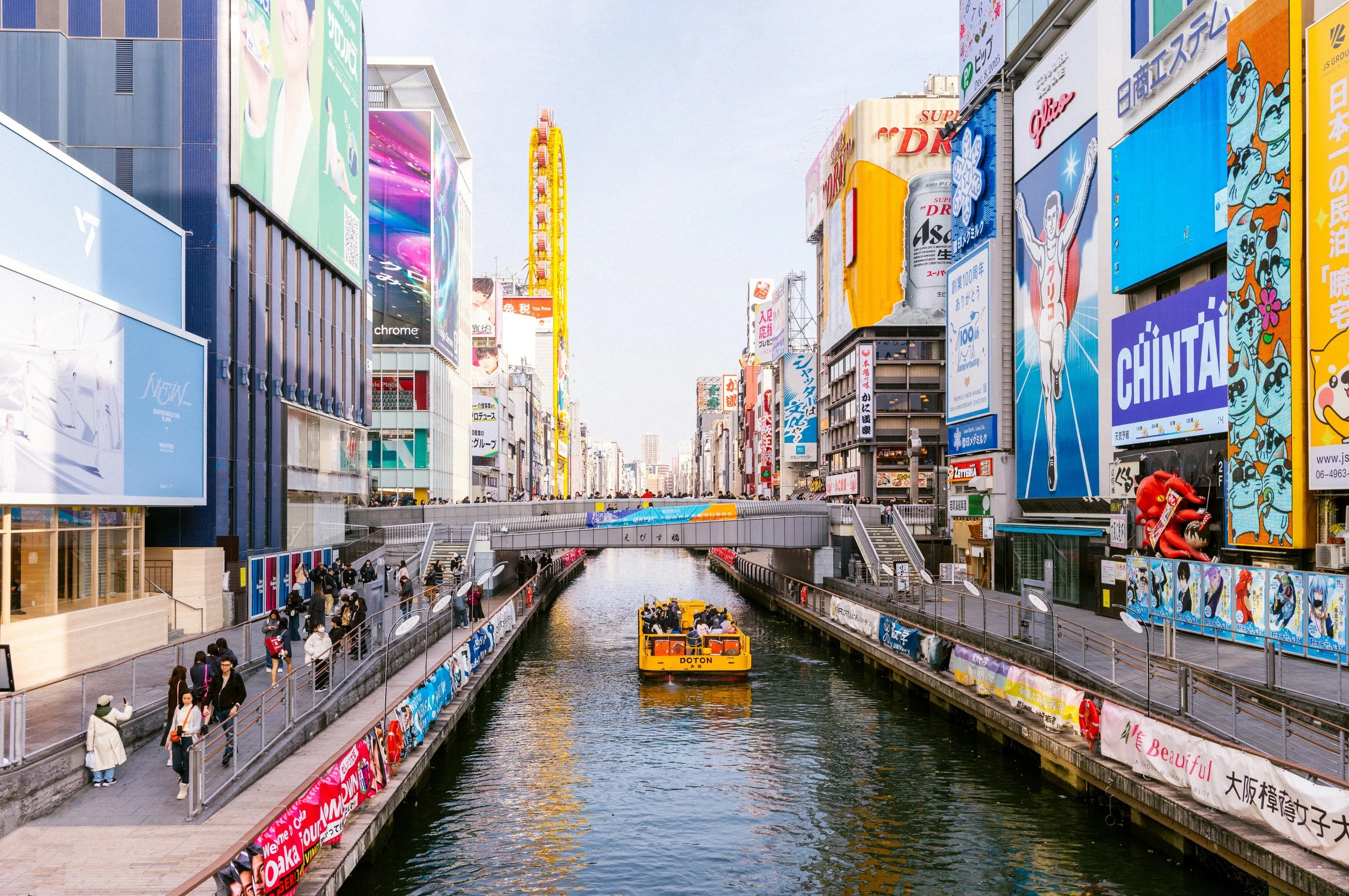
The Glico Running Man in Osaka’s Dotonbori district
Heading to Osaka but overwhelmed by travel options? This complete 2026 Osaka guide breaks down the best things to do from iconic food districts and nightlife to hidden gems and day trips, so you can plan your perfect trip with confidence.
Osaka hits you with full-on energy the moment you arrive. Loud, bright, and busy, yet somehow still intimate once you drift a few streets away from the main strips. One minute you're in the glow of neon and crowds, the next you've turned into a narrow alley with a tiny izakaya or a quiet shrine where everything feels strangely calm.
Of all the cities I visited in Japan, Osaka gave me the most to photograph, not because it's the most beautiful, but because it's the most alive.
It’s also an easy city to base yourself in, with Kyoto around 30 minutes away by train and Hiroshima roughly 90 minutes by Shinkansen. Although I’d advise basing yourself in Kyoto and then visit Osaka, especially if you like calmer environments.
Although WWII bombings almost completely destroyed the city, Osaka rebuilt quickly. It might not be the most conventionally beautiful city at first glance, but places like Osaka Castle, which I’d highly recommend visiting is set among parkland and water, offer a quieter glimpse into its past.
If you are a foodie, then come hungry, wander freely, and follow the smells as you are in for a treat, every dish feels rooted in tradition. From takoyaki and gyoza to humble bowls of ramen, nothing feels too flashy.
The Short Read
Where I stayed at: I stayed in central Osaka, close to transport and nightlife, making it easy to explore the city day and night.
Dōtonbori: Is Osaka’s electric heart, packed with neon lights, canal views, and some of the city’s best street food.
Food: Osaka lives up to its nickname “Japan’s Kitchen” with unforgettable street snacks, comfort dishes, and late-night eats.
Osaka Castle: Blends dramatic history with beautiful park views and is one of the city’s most iconic landmarks. This could my favourite place I have visited in Osaka.
Shitennō-ji: Offers a peaceful escape and insight into Japan’s oldest state-built Buddhist temple.
Site of Sanada Yukimura's Death (Yasui Shrine): This quiet shrine marks the site of legendary samurai Sanada Yukimura’s final stand.
Tsutenkaku Tower & Shinsekai Market Street: Retro Osaka comes alive here with old-school charm, street food stalls, and panoramic city views.
Namba Yasaka Jinja: Famous for its giant lion-head shrine stage, this hidden gem is both unique and photogenic.
Final Thoughts: Osaka is vibrant, welcoming, and endlessly delicious making it a must-visit destination for any Japan itinerary.
Would I go back: Yes but only for a day trip.
Overall Experience: ⭐⭐⭐⭐
Where I Stayed in Osaka (Budget Hotel Review)
I stayed at the OneFive via Airbnb for a total cost of £93.92 for two nights in Chuo Ward. It was 20-minute walk to Ebisu Bridge where you can see the iconic Glico Running Man.
This is very much a budget hotel in Osaka. If you’re simply looking for somewhere clean to sleep, store your luggage, and head back out exploring, it does the job. The rooms are small but quiet, and the hosts were accommodating, letting me leave my bags after checkout and check in an hour early.
I’ll be honest this is not a hotel to stay in unless you literally want to save money and have the basics and to get into Dōtonbori very quick and have a Lawsons literally around the corner. If you read the reviews for this hotel on trip advisor you will see what I mean and why it’s rated 2.7.
Dōtonbori at Night - Osaka’s Neon District
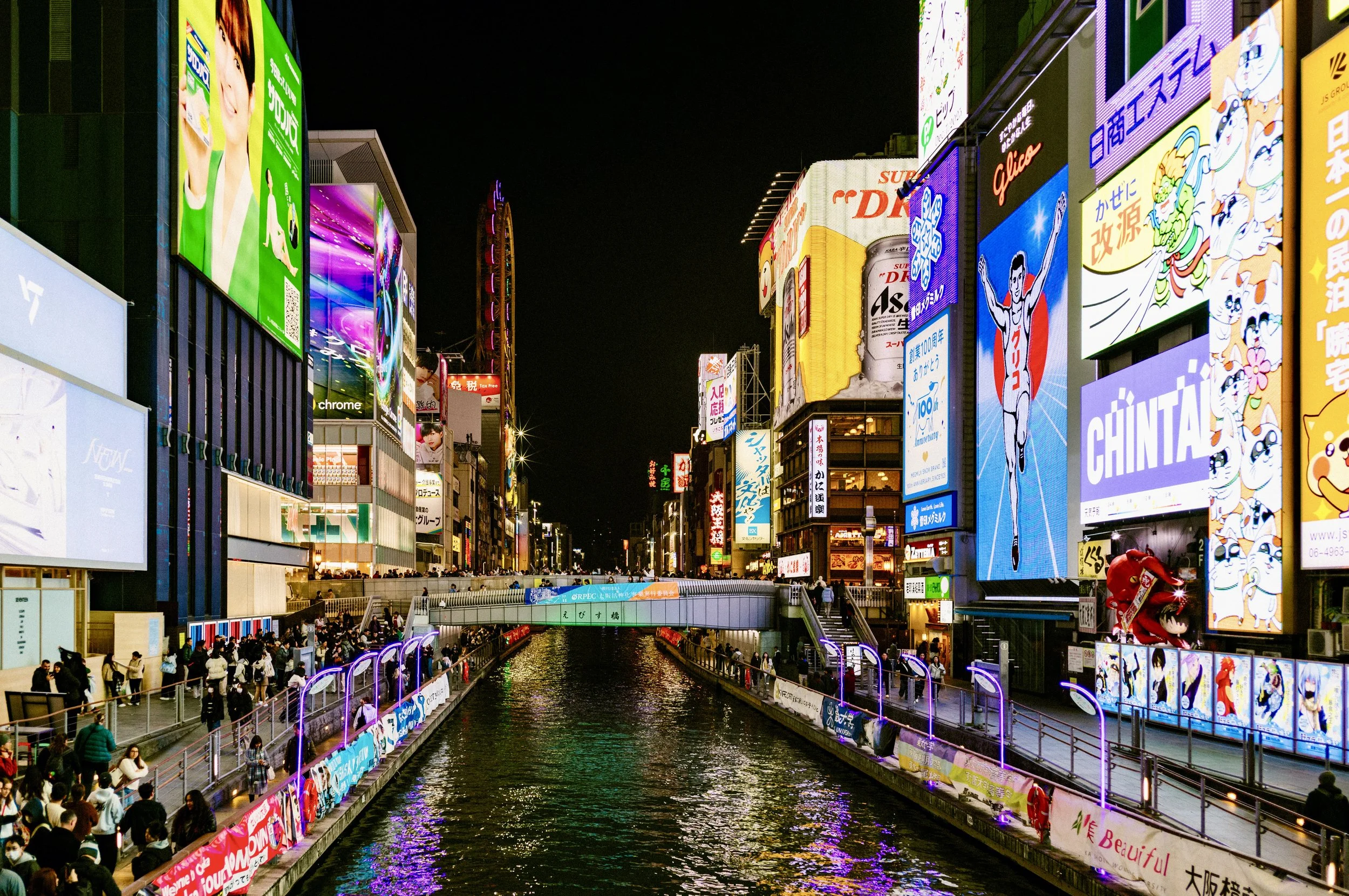
The Glico Running Man in Osaka’s Dotonbori district at night
Osaka is very full-on, as you can probably tell from the image above. It’s loud, chaotic, and oddly cinematic giving proper Blade Runner vibes, with or without the rain. Historically, Osaka has always been a place of movement and exchange. Once known as Naniwa, it was actually Japan’s capital in the 7th and 8th centuries and then grew into the nation’s economic heart.
After dark, the neon spills straight onto the canal and huge crowds drift along Dōtonbori. You will notice that there are more people on the right hand side of the picture due to everyone wanting the famous pose image with the famous Glico Running Man who just keeps sprinting through the night. It’s actually quite funny watching people copy the pose for photos, wobbling slightly as they try to balance with him glowing in the background.
The canal itself is older than the lights and billboards suggest. Originally dug during Osaka’s rise as Japan’s merchant capital, these waterways once moved rice, goods, and people through the city.
Today, instead of cargo boats, it reflects LED screens, footsteps, and constant movement.
Shooting Dōtonbori at Night With the M11
Dōtonbori is one of the best photography locations in Japan and I don't think it gets discussed that way enough. It's always framed as a food and nightlife destination (which it is) but as a photography subject it's extraordinary. The neon spills onto the canal water, the LED screens create moving colour, and the crowd density means something interesting is happening in every direction at once.
I shot most of Dōtonbori on the 28mm at around f/2.8, ISO 1600, letting the neon do the work. I find that the M11's sensor at 1600 gives you clean files with a quality of light that feels almost analogue in the warmth of it. I was genuinely pleased with what I got back.
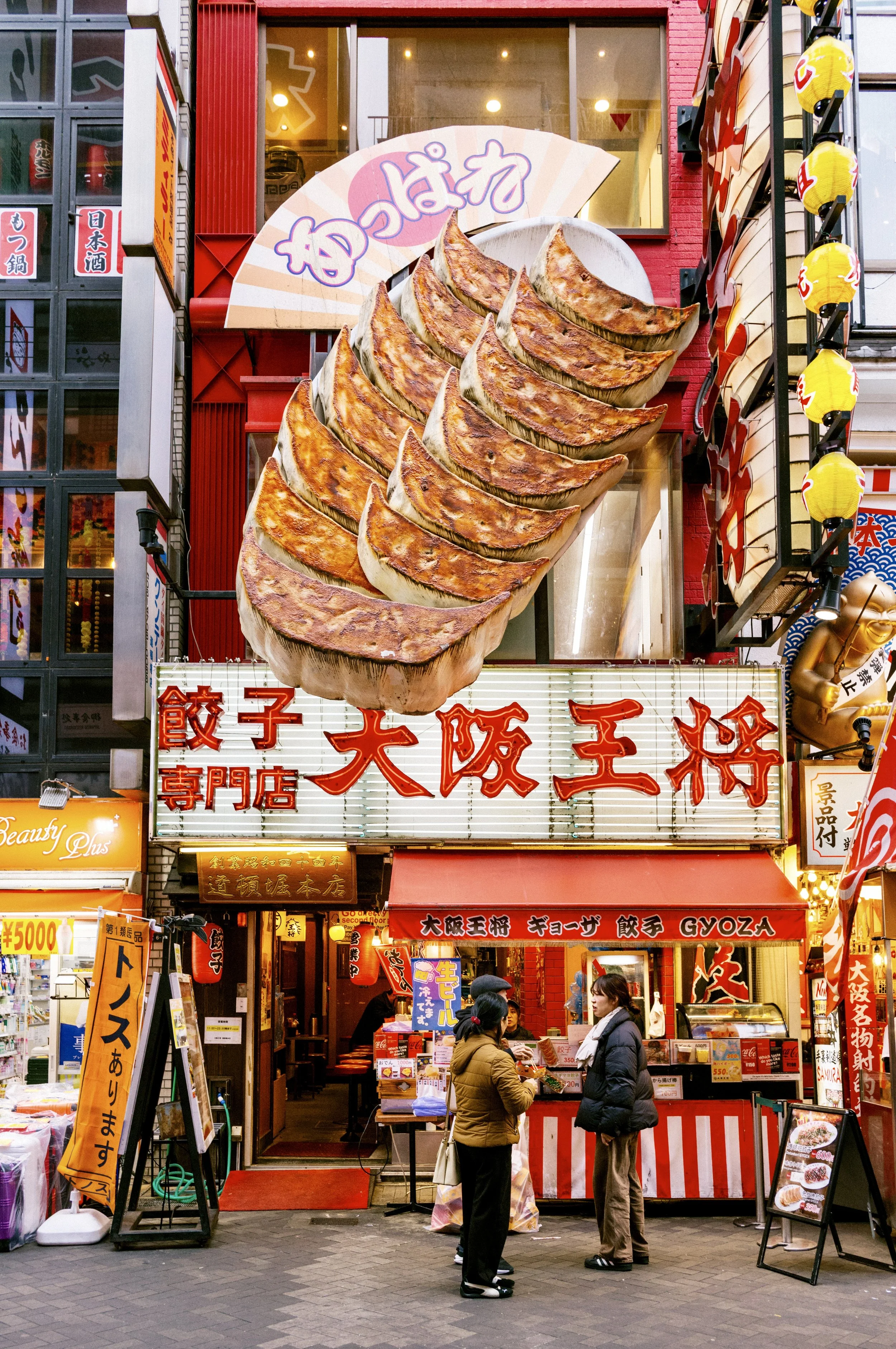
The food stall shopfronts pulled me in before I'd made any conscious decision to photograph them. Oversized lanterns, bold painted signage, exaggerated replica food displays, they are massively over the top to stop you and they stopped me, camera first. I probably spent forty minutes on a fifty-metre stretch of street just working through the fronts of different stalls.
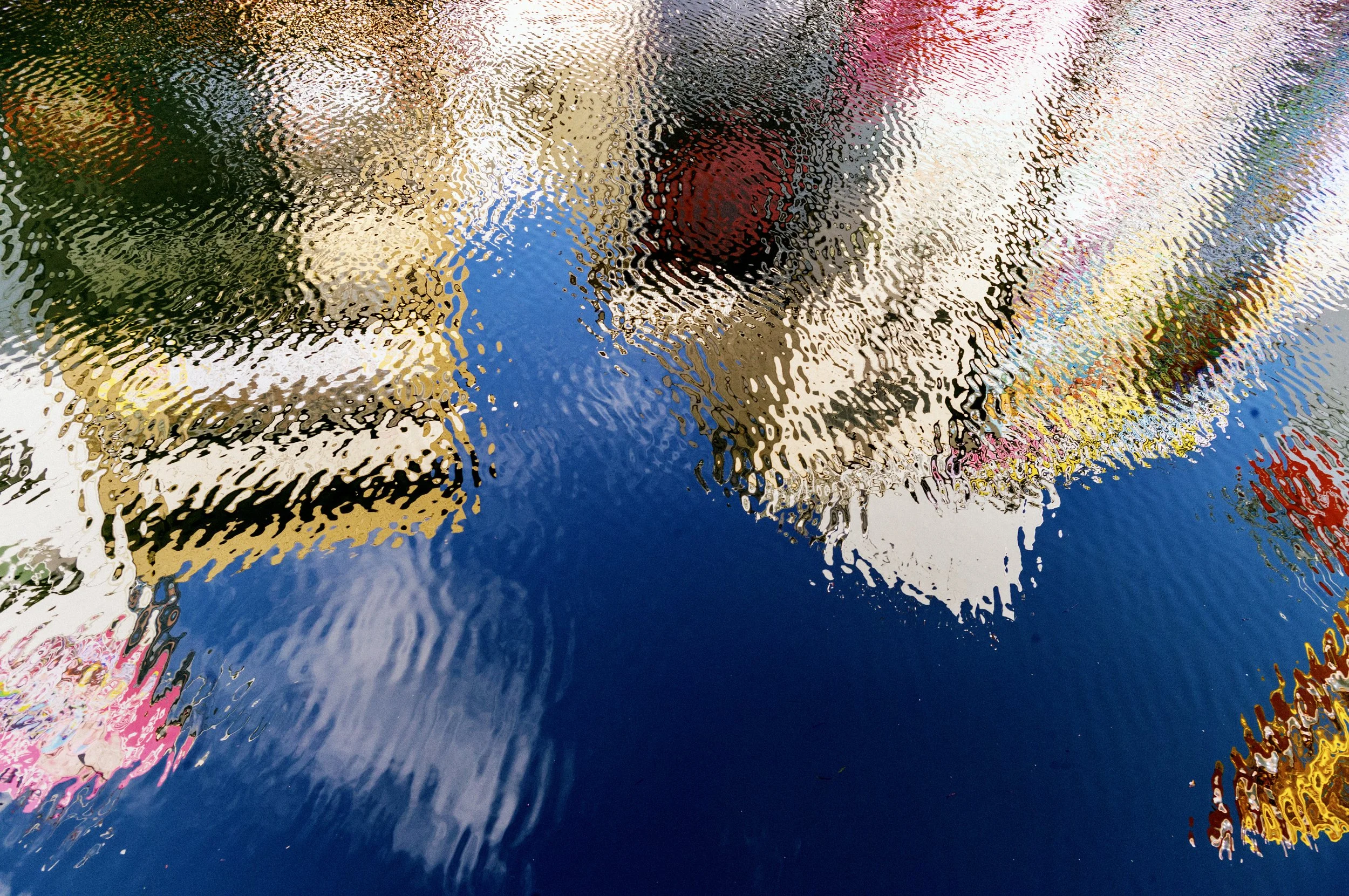
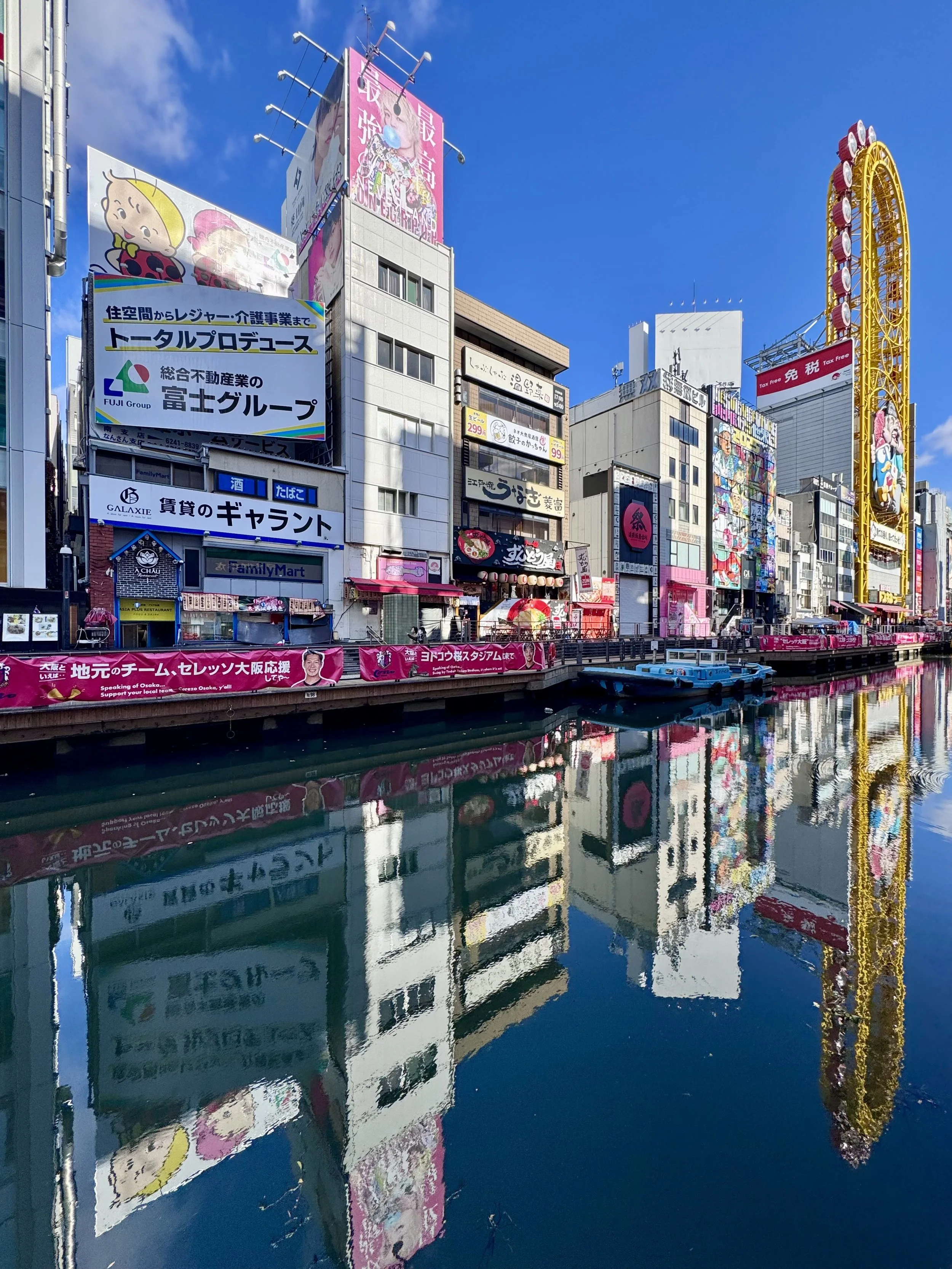
The canal itself is the other subject worth time. The reflection of the Glico Running Man and the surrounding neon in the water at night is a frame most people shoot from the bridges, but drop down to water level if you can and the reflection fills the lower half of the frame more dramatically. On the 28mm you get both the lit signs above and the reflection below in one composition without the distortion a wider lens would introduce.
One thing I'd do differently: I didn't have the Osmo Pocket 3 running anywhere near enough in Dōtonbori. The movement and the sound and the energy of it at night is exactly the kind of thing video captures that photography can't. By the time I was comfortable with the Pocket 3, I was already on my way to Kyoto. If you're going to Japan with both a stills camera and a video camera, Dōtonbori at night is where you want both running simultaneously.
Osaka Food Guide - Street Food, Izakayas & Local Specialties
One minute you’re shoulder-to-shoulder in a glowing maze of signs, the next you’re watching a chef quietly shaping dumplings behind a small counter, steam fogging up the window.
Something else that captured me was how the food stall shopfronts in Osaka are loud and theatrical, stacked with oversized lanterns, bold signage, and exaggerated food displays designed to stop you in your tracks (which worked as I start photographing all of them). Every decoration competes for attention, turning the street into a visual feast that’s just as tempting as the food itself.
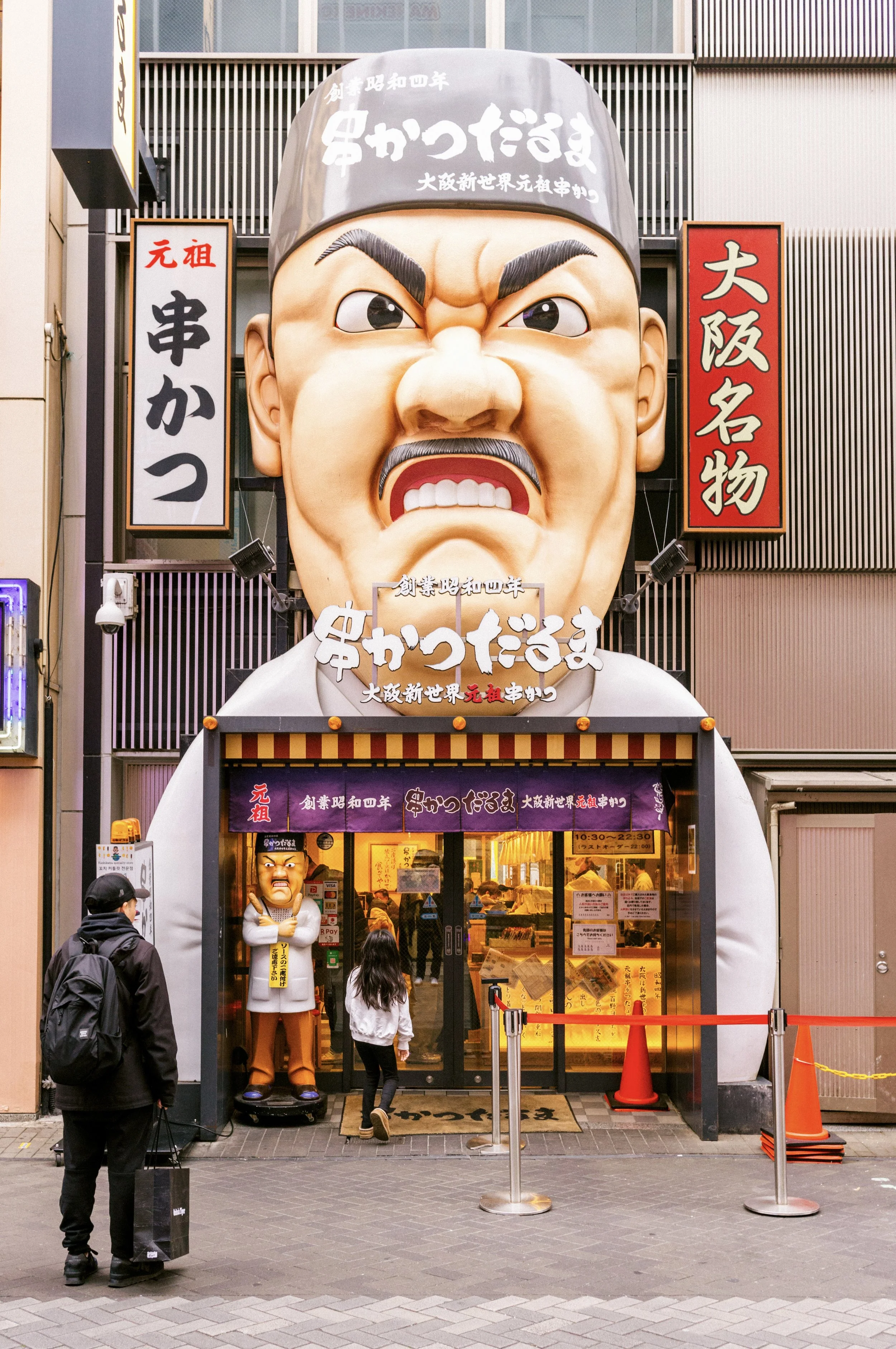
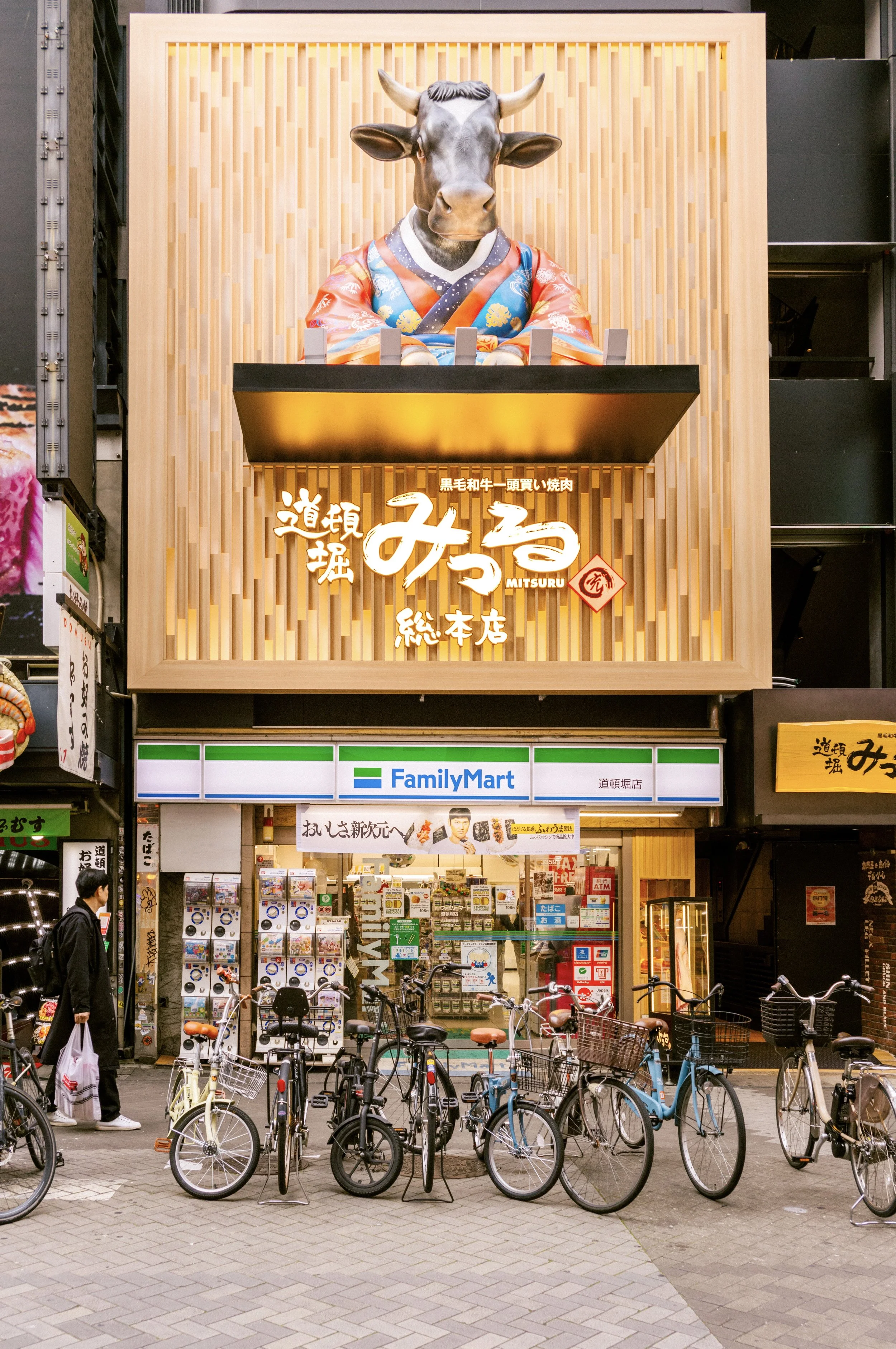

It was here I did my food tour, once you cross the bridge into Dotonbori Shopping Street you will start to understand why Osaka is known as "the nation's kitchen”. As it offers incredible culinary experiences, from street food stalls to Michelin recognised eateries.
Wandering toward the food stalls, steam rises into the night air and the smell of cooking pulls you in before you’ve even decided what you’re ordering.
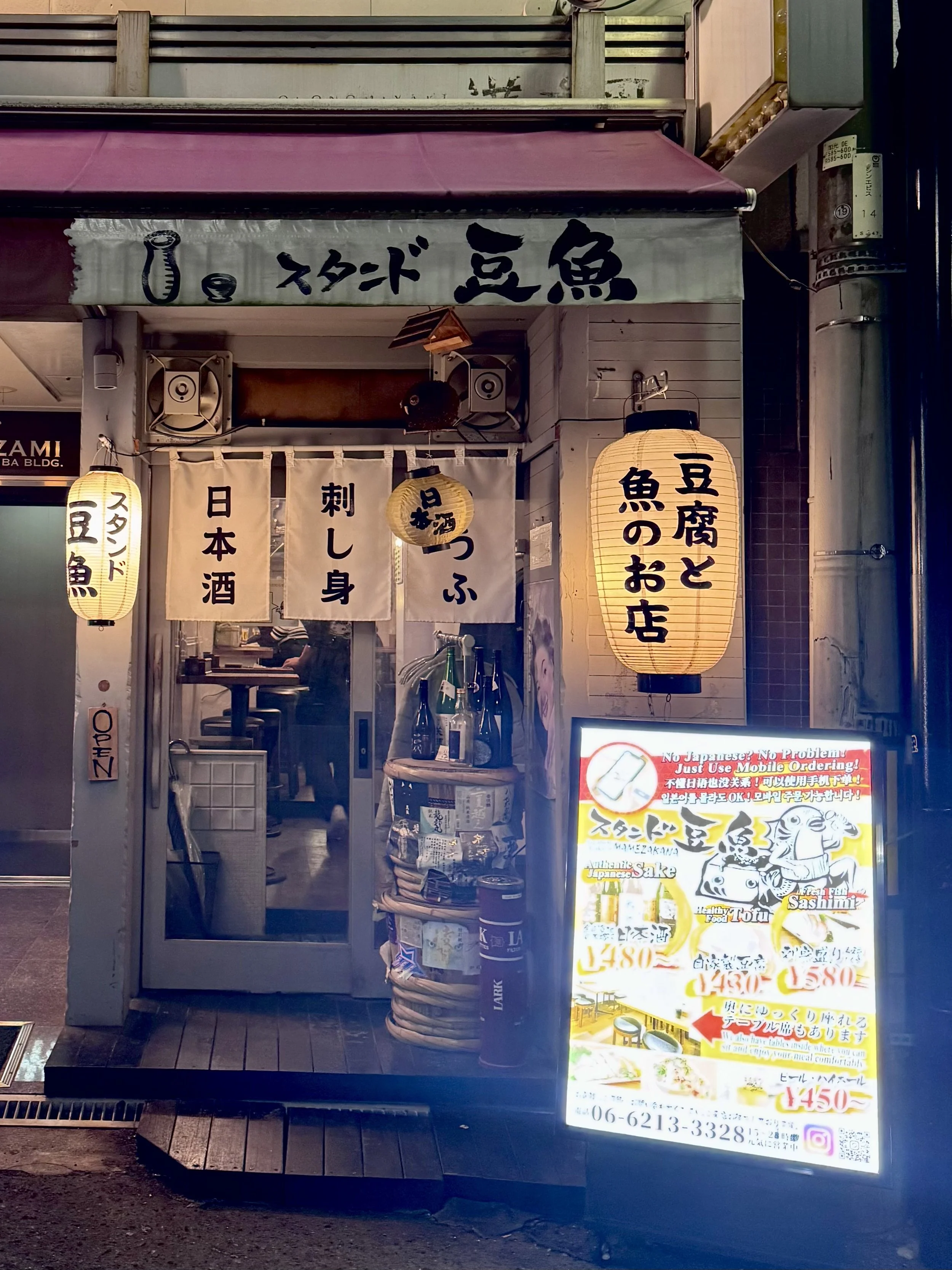
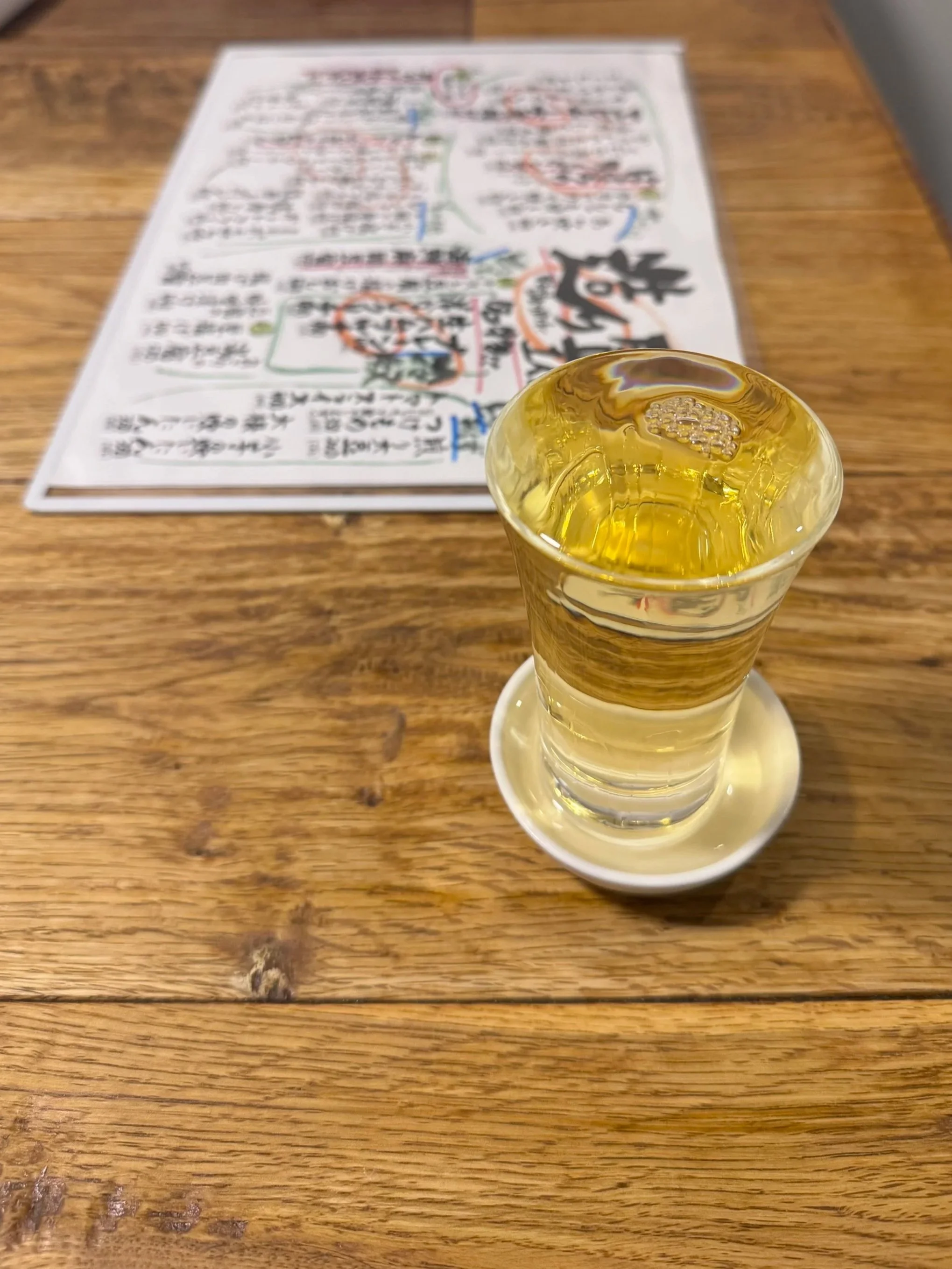
When I did my food tour with my guide Moa, I had the best food I had in Japan, first going to mamezakana where I was treated to the best food and sake Ive ever had!
I’d highly recommend going so expect an izakaya style menu designed for sharing alongside drinks, with a focus on fresh sashimi, grilled seafood with highlights like bluefin tuna, miso-marinated black cod, wagyu beef, and karaage chicken.
I can’t wait to go back, mamezakana is must-stop for any foodie in Osaka as far as I am concerned!
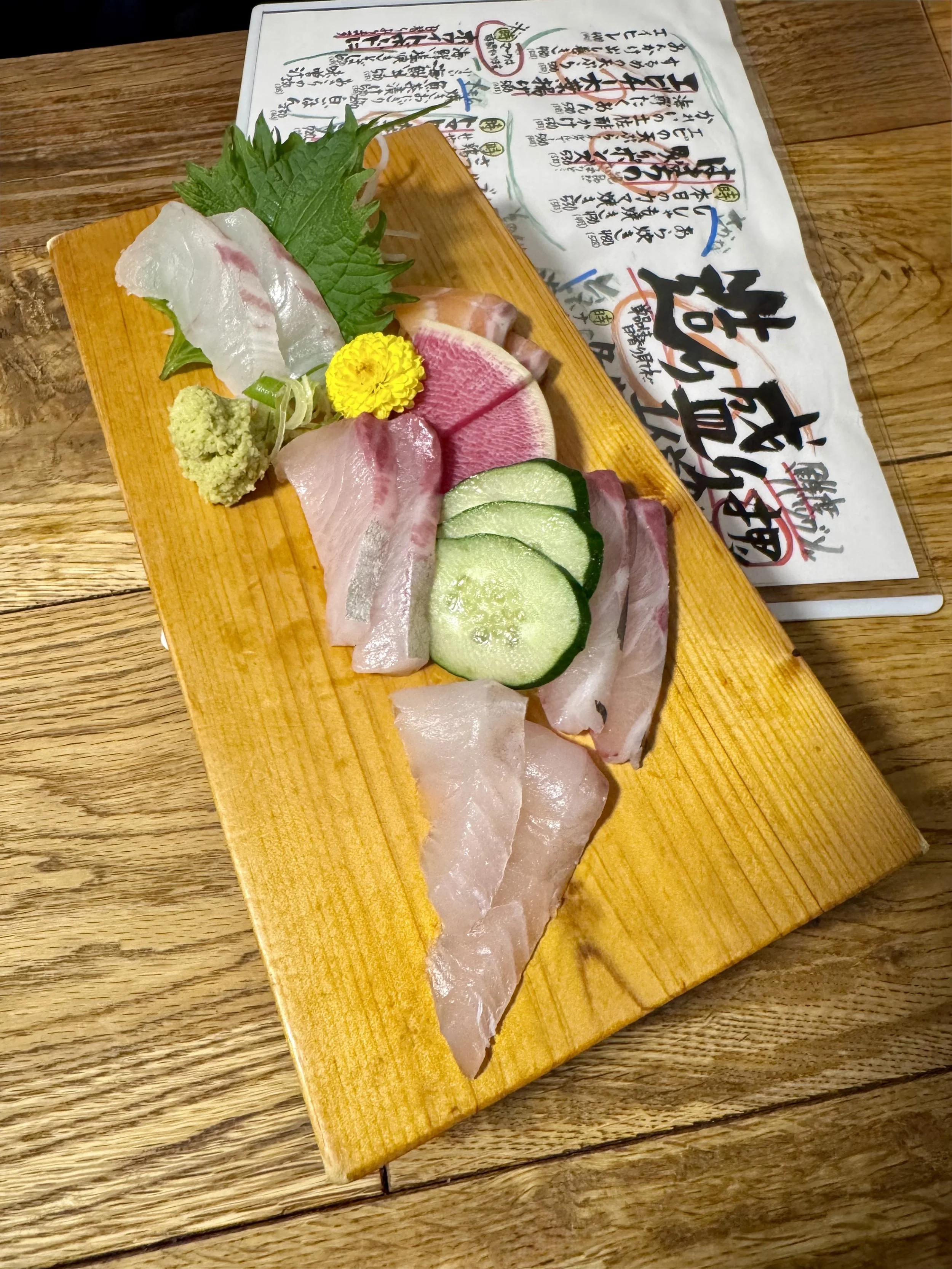
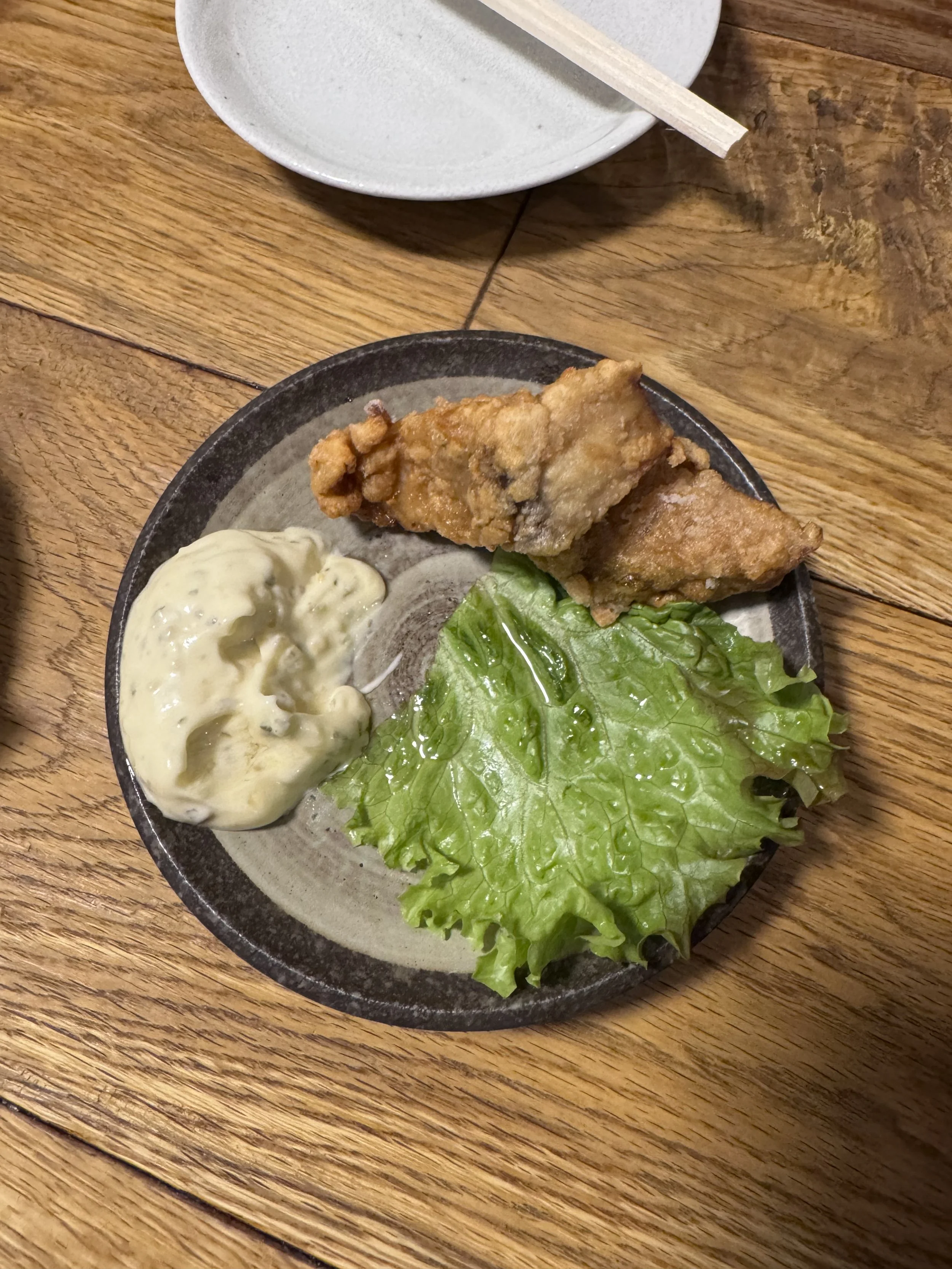
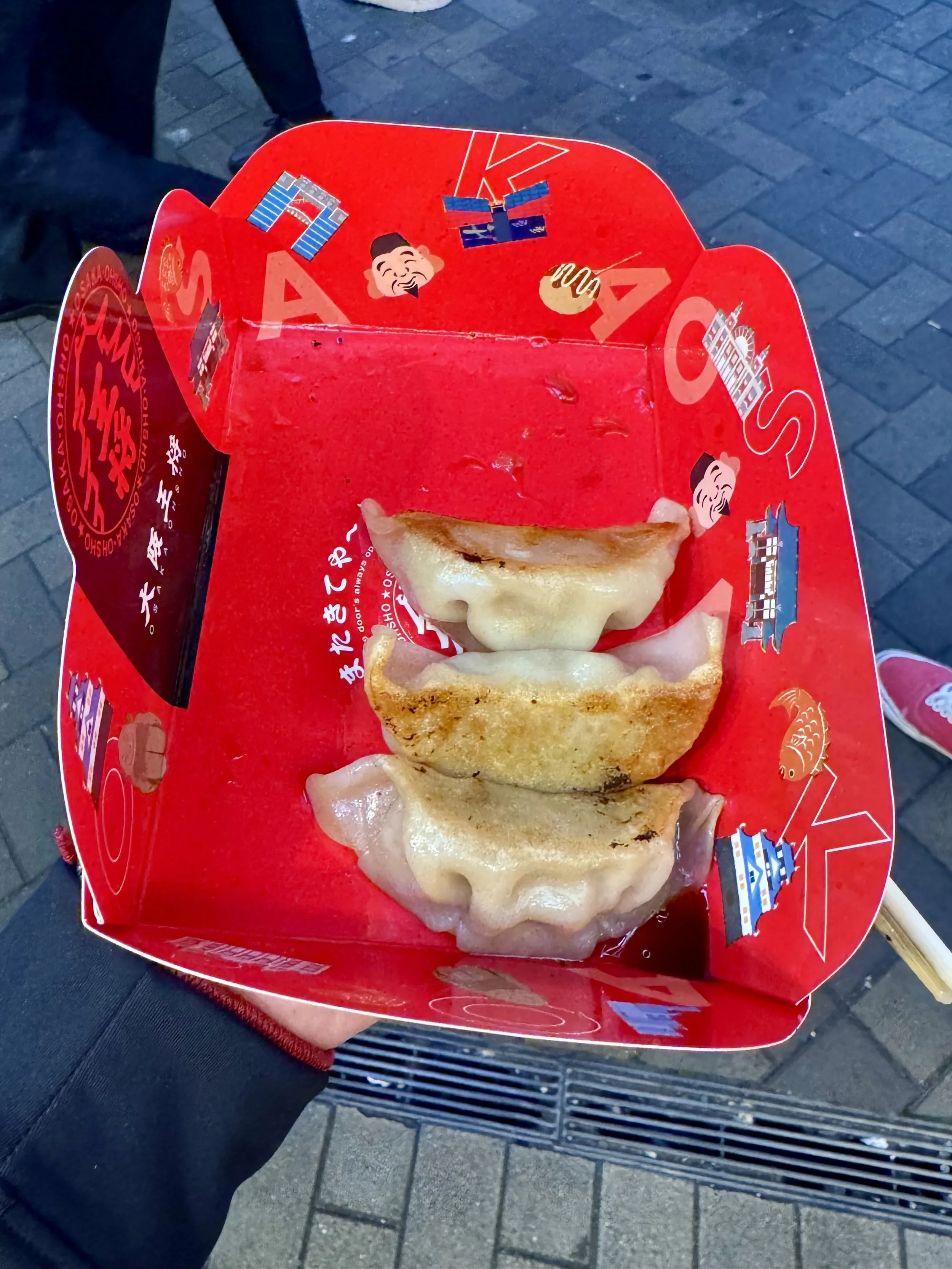
Gyoza Dumplings
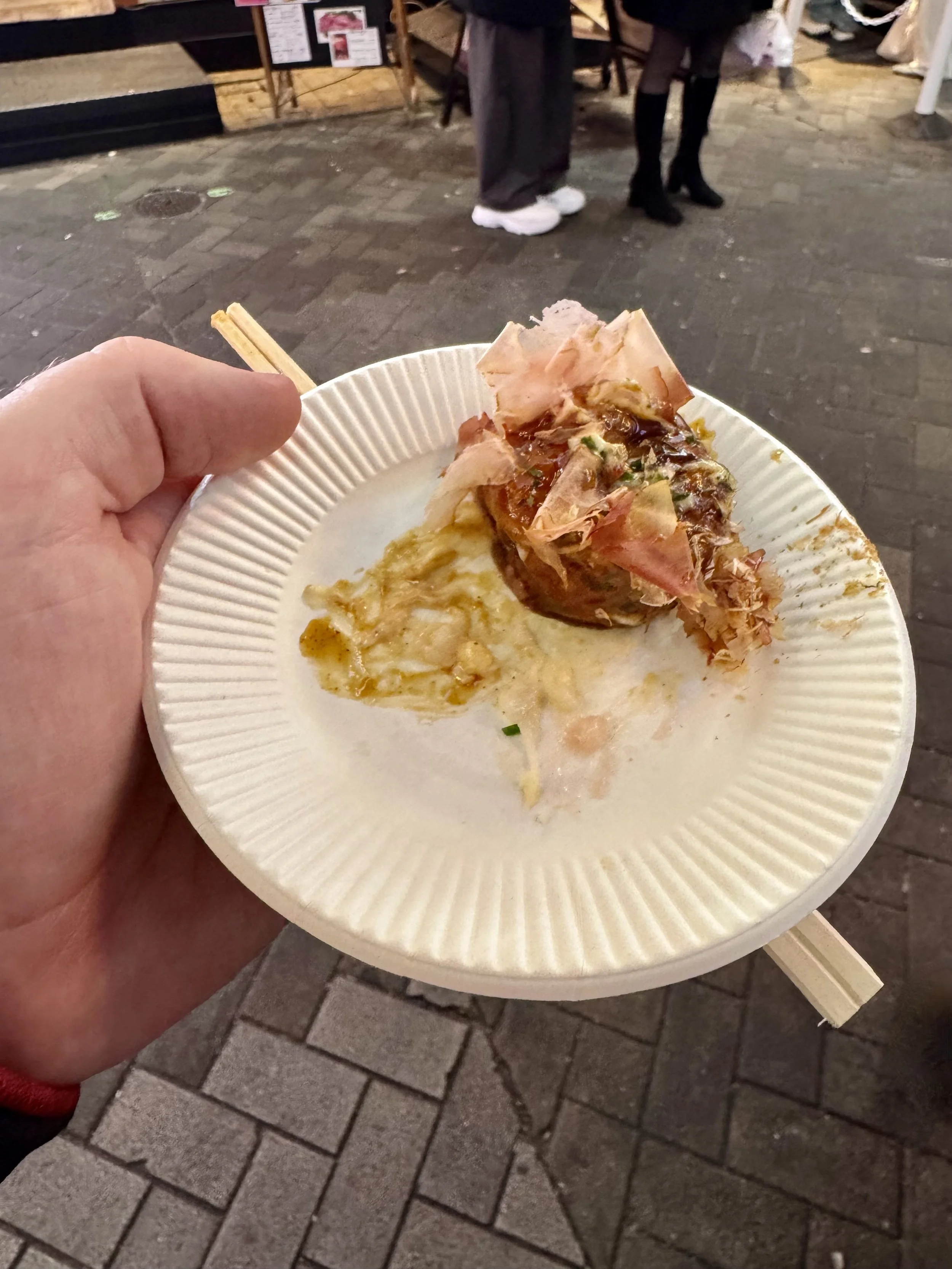
Takoyaki
Next up was some freshly made gyoza dumplings from Osaka Ohsho (which you can’t miss with the big landmark gyoza sign) which were just as unbelievable! Panfried with a crispy bottom and tender top. Whilst I got my dumplings from the stall at the front you can go in.
Six pork dumplings cost me ¥220 (£1.06) perfect for a quick snack while exploring Dotonbori.
This was quickly followed by some takoyaki (octopus balls) from Takoyaki Wanaka, a popular Japanese street food. This is a popular stall but queues move quickly,
They are savoury, ball-shaped dumplings made from a wheat flour batter, filled with diced octopus (a generous amount too), tempura scraps, and green onion. Served with takoyaki sauce and bonito flakes, these crispy on the outside and gooey on the inside balls, are served piping hot, so be warned! I cut mine open to cool before eating but these were pure fire!
Eight balls of Takoyaki cost me ¥600 (£2.88), again another perfect quick snack when exploring.
These two alone are more than enough to satisfy hunger! and for a total of £3.94 you just can’t go wrong.
Osaka Castle - History, Gardens & Visitor Tips
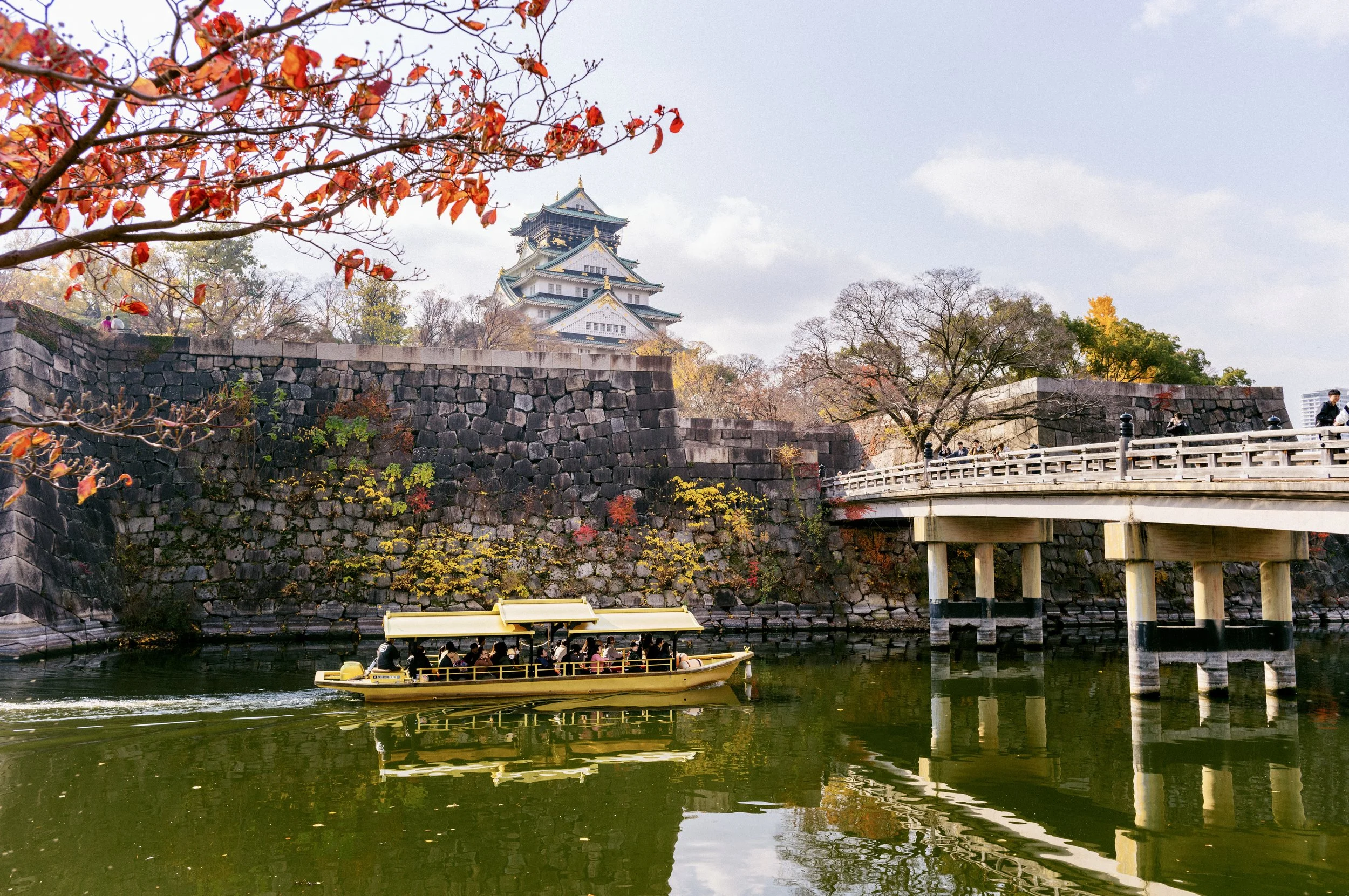
Osaka Castle
Osaka Castle was pretty incredible and a welcomed bit of calm in comparison to Dotonbori.
Built in the late 16th century by Toyotomi Hideyoshi, Osaka Castle played a central role in the unification of Japan. It has been destroyed, rebuilt, and restored multiple times, which somehow adds to its presence layered history rather than perfection. The walls and the boulders are give aways for this as at times lots of different shapes and sizes have been used.
Osaka Castle is surrounded by 106 hectares of open park so walking the outer moats and gardens, it’s easy to forget you’re still in one of Japan’s busiest cities. The contrast is stark: chaos one moment, quiet reflection the next, I really enjoyed this part of Osaka after a busy night out eating amazing food.
When you look over the moat to see the castle it is no surprise the area has been used as a filming location and visual reference for Shōgun (on Disney plus) with the scale, symmetry and stillness. It all feels very cinematic without trying.
Once inside the castle grounds, follow the paths south-east from the main keep and you'll find a pond where the castle reflects cleanly in the water, it's not signposted and most visitors walk straight past it. I found it by following the path further than most people bother going, which is usually how the best frames in a busy tourist location reveal themselves.
Early morning gives you the reflection without wind breaking the surface. The moat walls on the north side are worth shooting too with the varying sizes and shapes of the stones are evidence of different rebuilding periods across different centuries, and in black and white that texture tells its own story.
On the M11 with the 28mm I shot the reflection at f/8 to keep the castle sharp in both the water and the real frame above, is one of the Osaka images I'm genuinely pleased with.
To enter the main keep and stone wall museum will cost you ¥1200 (£5.76) whilst it is free for children age 15 or younger.
Toptip: Long lines can form in front of the castle keep on busy days. To skip the line, purchase e-tickets in advance through Klook. You will then receive a QR code which allows you to skip the regular line and directly enter the castle. Entry times are 9:00 to 17:00 (entry until 16:30); extended hours on selected days so check the main website.
Address: 1-1 Ōsakajō, Chuo Ward, Osaka, 540-0002, Japan (A 10-15 minute walk from Osakajokoen Station or Morinomiya Station on the JR Loop Line)
Just be aware you are not allowed to take photos inside of the castle on some of the levels as it house’s a museum on samurai with swords, art and armour. There are videos that you can watch on the battles to understand the importance Osaka played in the unification of Japan.
If you are going to Osaka Castle in the Cherry Blossom season (April time) the pictures you will be able to take will be amazing as Nishinomaru Garden which is a lawn garden has 600 cherry trees!
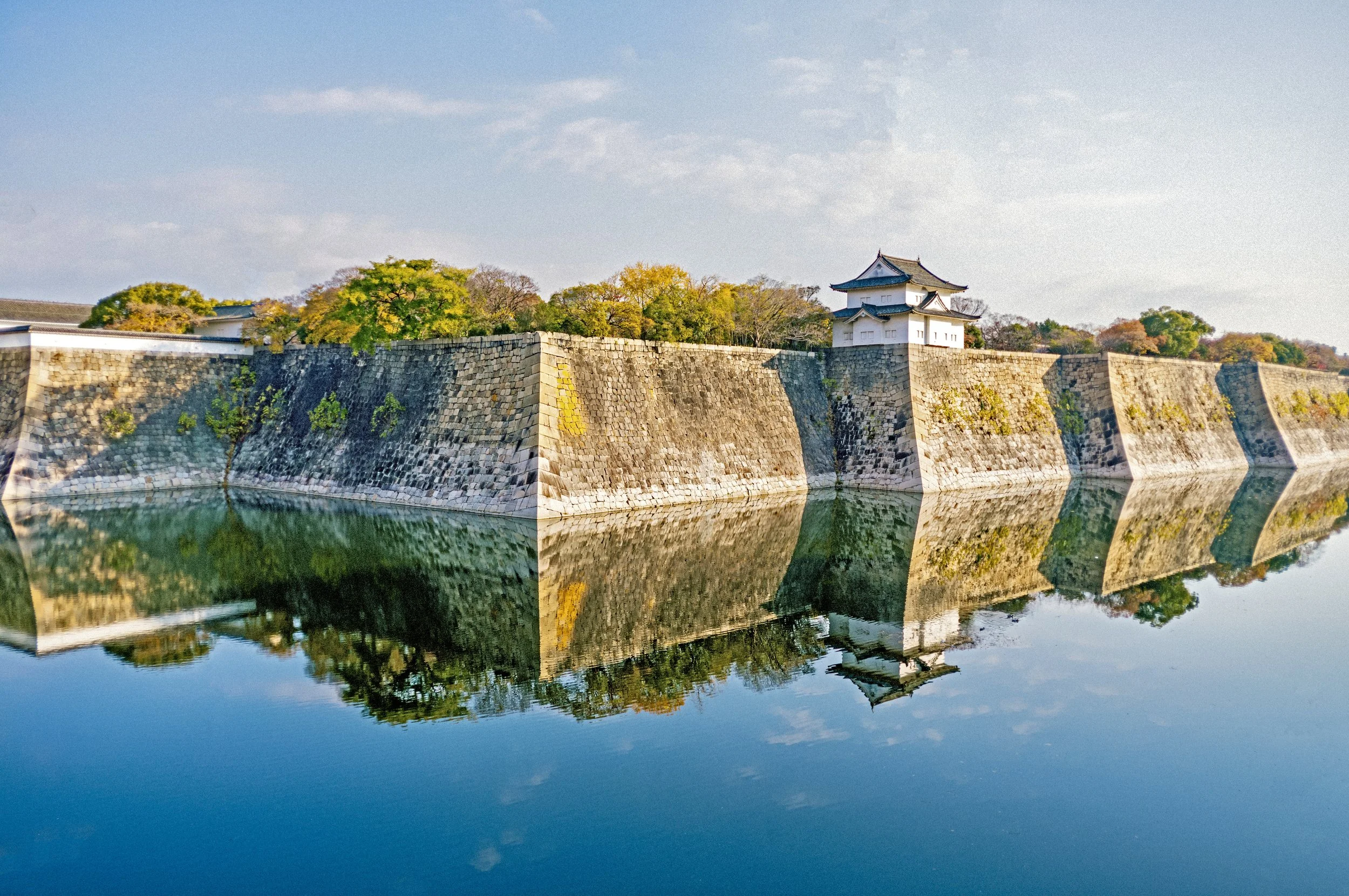
Osaka Castle Moat Walls
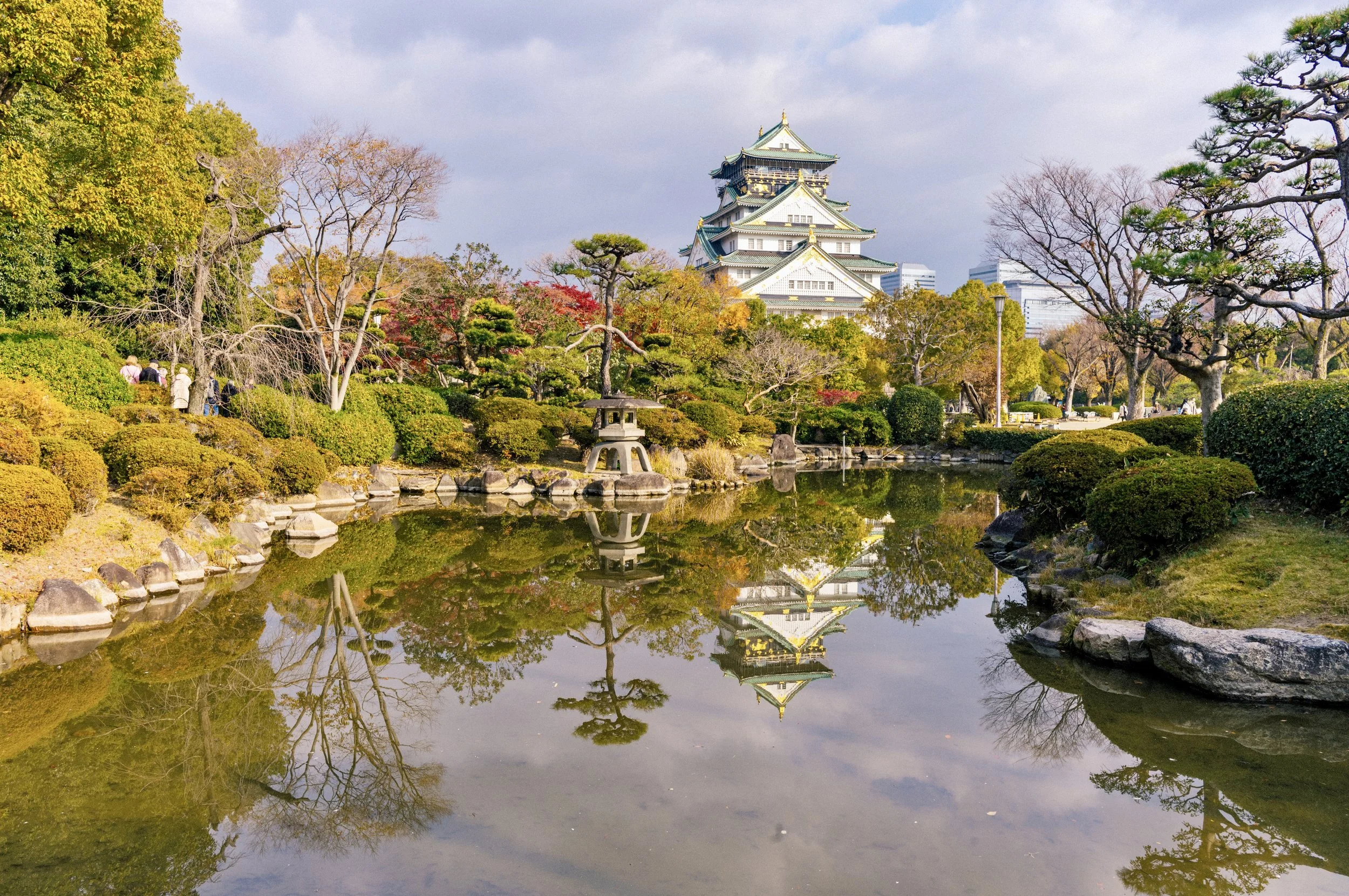
Osaka Castle reflection in pond water
Shitennō-ji - Japan’s Oldest Buddhist Temple
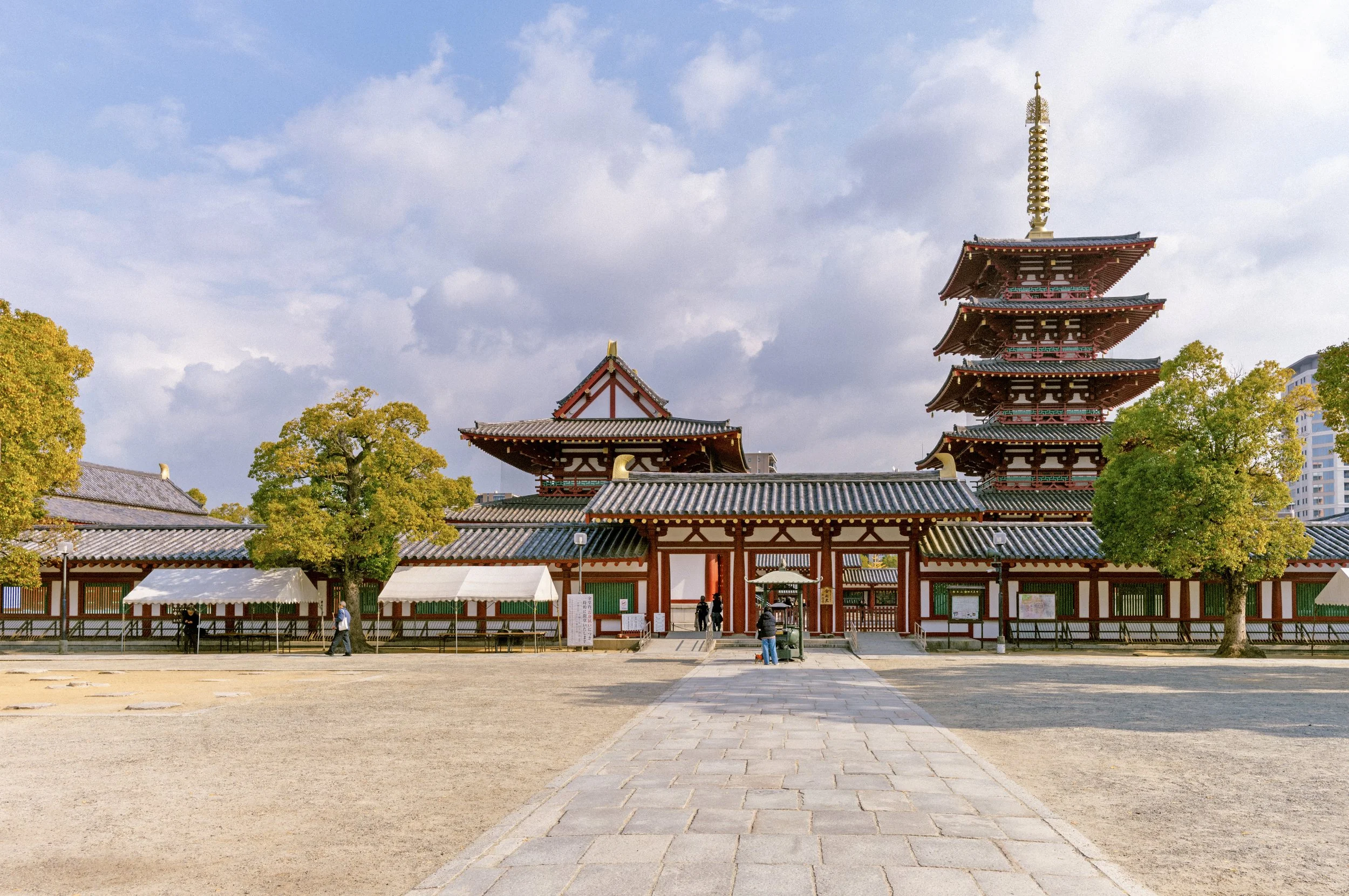
Shitennō-ji from the outside
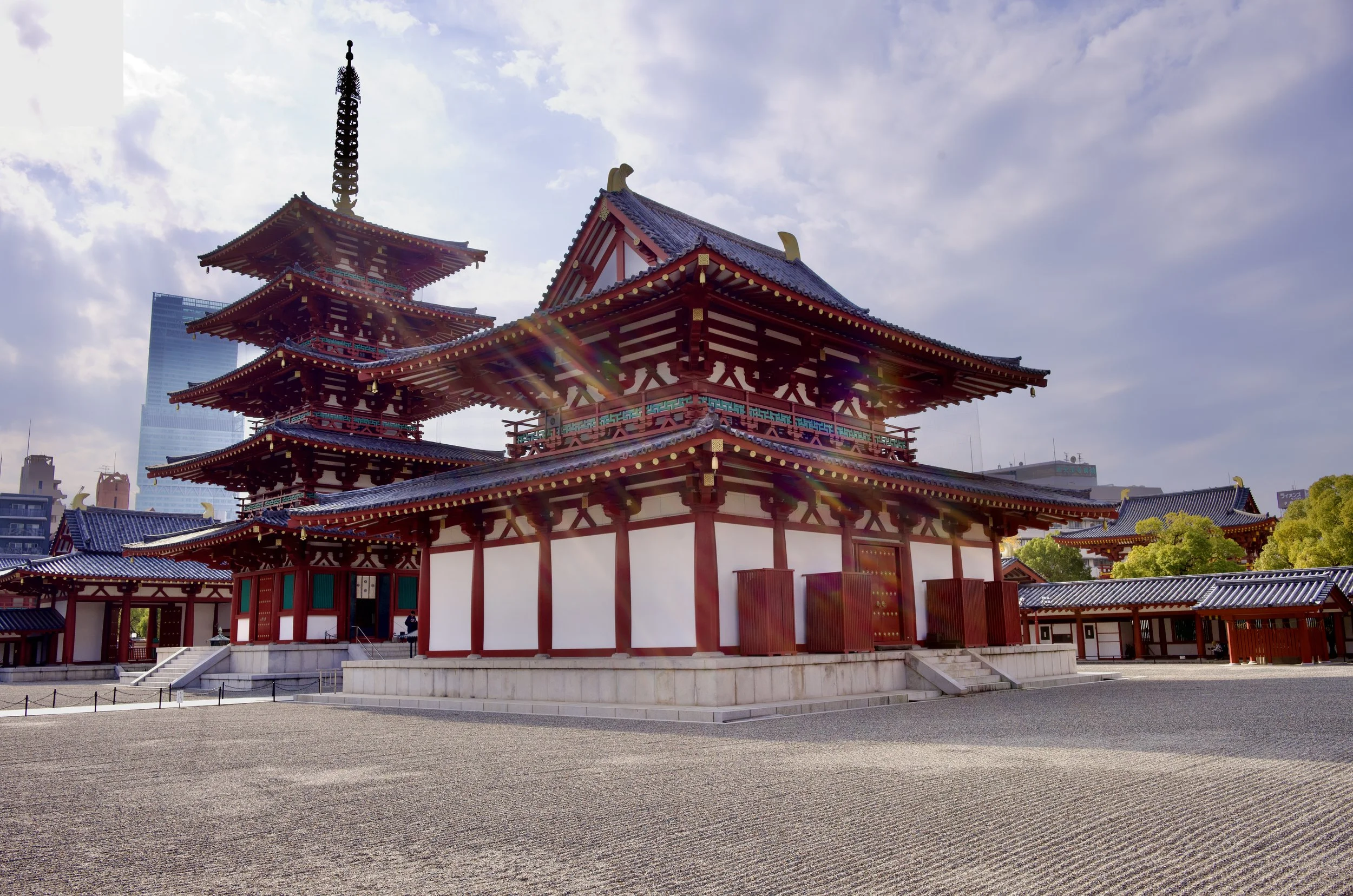
Shitennō-ji once inside
Shitennō-ji was originally built in 593AD and is considered the oldest Buddhist temple in the country. The temple was commissioned by Prince Shōtoku who is credited with encouraging the spread of Buddhism within Japan.
To enter the gardens and the temple you need to pay ¥500 (£2.40).
Incredibly like other buildings in Japan, the temple you are seeing in the pictures was actually built in 1960s and 70s after the bombings from world war 2, in fact it’s been rebuilt several times due to being burned, damaged, and destroyed.
Be mindful of no-photo signs, as photography is prohibited in some temple areas.
When I stepped into the main hall (the Kondō), the air was filled with the scent of incense. A monk sat before the Bodhisattva Kannon statue that is encircled by the Four Heavenly Kings, chanting a prayer that echoed through the hall as visitors stood quietly listening. Unable to take photographs, I simply enjoyed the moment taking it all in. It was mesmerising to stand there, listening to the steady rhythm of the chant. It is in this hall that many people come here to pray to Prince Shōtoku, believing their wishes may be granted.
The pagoda at Shitennō-ji (the tiered tower with a golden Sōrin) is one of the few you can actually climb to the top of. This is a 39.2-meter, five-story pagoda to climb. You are required to take off your shoes before climbing the spiral staircase. The staircase is quite narrow and is not suitable to climb if you are unfit but the views at the top are worth a look, just be aware you are not allowed to take pictures inside the pagoda or from the windows at the top.
I didn’t explore the gardens, which I now regret after watching a few YouTube videos, so make sure you do If you visit, I’d definitely recommend taking the time to see them. I was on an Osaka tour, so I had to move on quickly after walking around the temple.
It was a quiet, peaceful, and uncrowded visit, giving you plenty of time to explore at your own pace, unlike some of the busy temples I visited in Kyoto and Tokyo. Another bonus is that it’s just a short walk from the metro station, with toilets and vending machines available on site.
Yasui Shrine – Site of Sanada Yukimura’s Final Stand
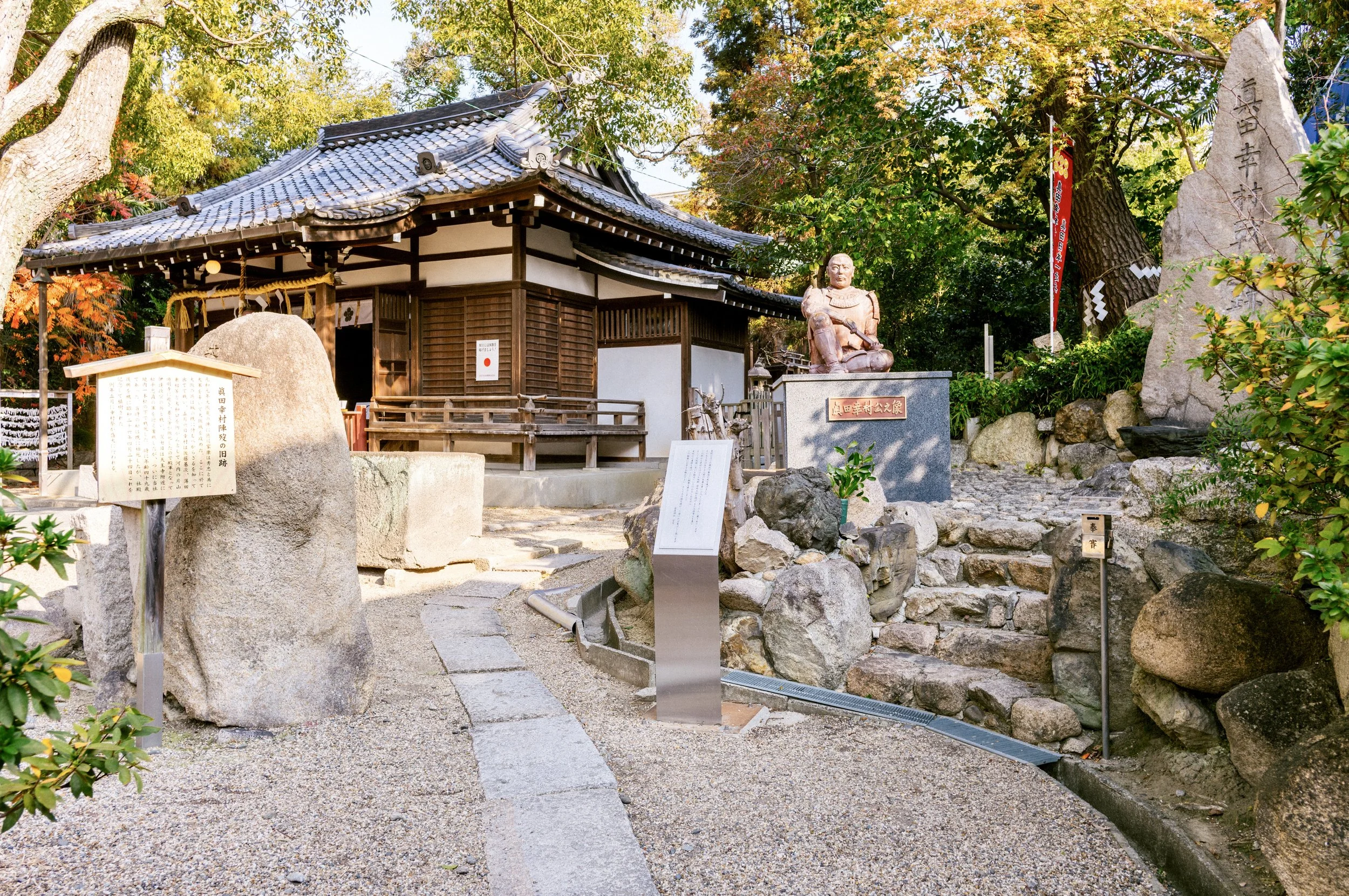
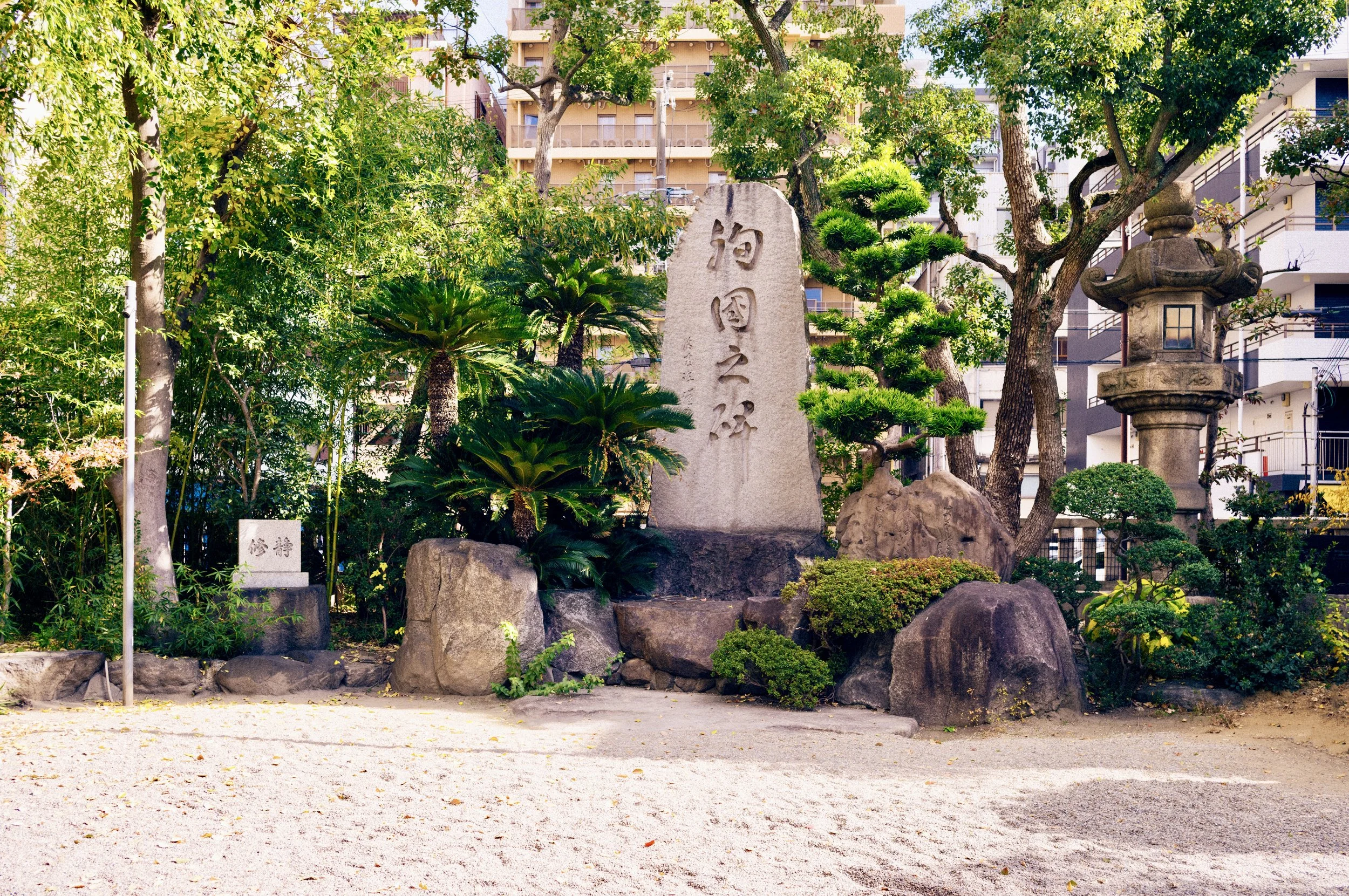
Site of Sanada Yukimura's Death (Yasui Shrine)
Hidden inside Yasui Shrine in Tennoji is the spot where legendary samurai Sanada Yukimura was killed during the Siege of Osaka in 1615.
Tucked away in Yasui Shrine in Tennoji, Osaka, is a quiet but important piece of samurai history. This is the very ground where Sanada Yukimura often called the “Crimson Demon of War” or “the bravest warrior in Japan” met his end here, the exact spot is meant to be where his statue is in the picture.
After a fierce final assault on Tokugawa Ieyasu’s main camp, Yukimura was exhausted and badly wounded. According to legend, he stopped to rest beneath a pine tree on the shrine grounds. It was there that Nishio Nizaemon, a soldier serving under Matsudaira Tadanao, found and killed him helping to bring to an end to one of the most dramatic final stands in Japanese samurai lore.
It is very easy to miss this spot walking down the road as it’s tucked away and access down a small thin alley that opens up in the grounds where the shrine is located. Despite the busy road being meters away the whole area feels very calm and peaceful.
Address: 1-3-24 Osaka, Tennoji-ku, Osaka 543-0062, Japan.
Tsutenkaku Tower & Shinsekai – Retro Osaka & Local Eats
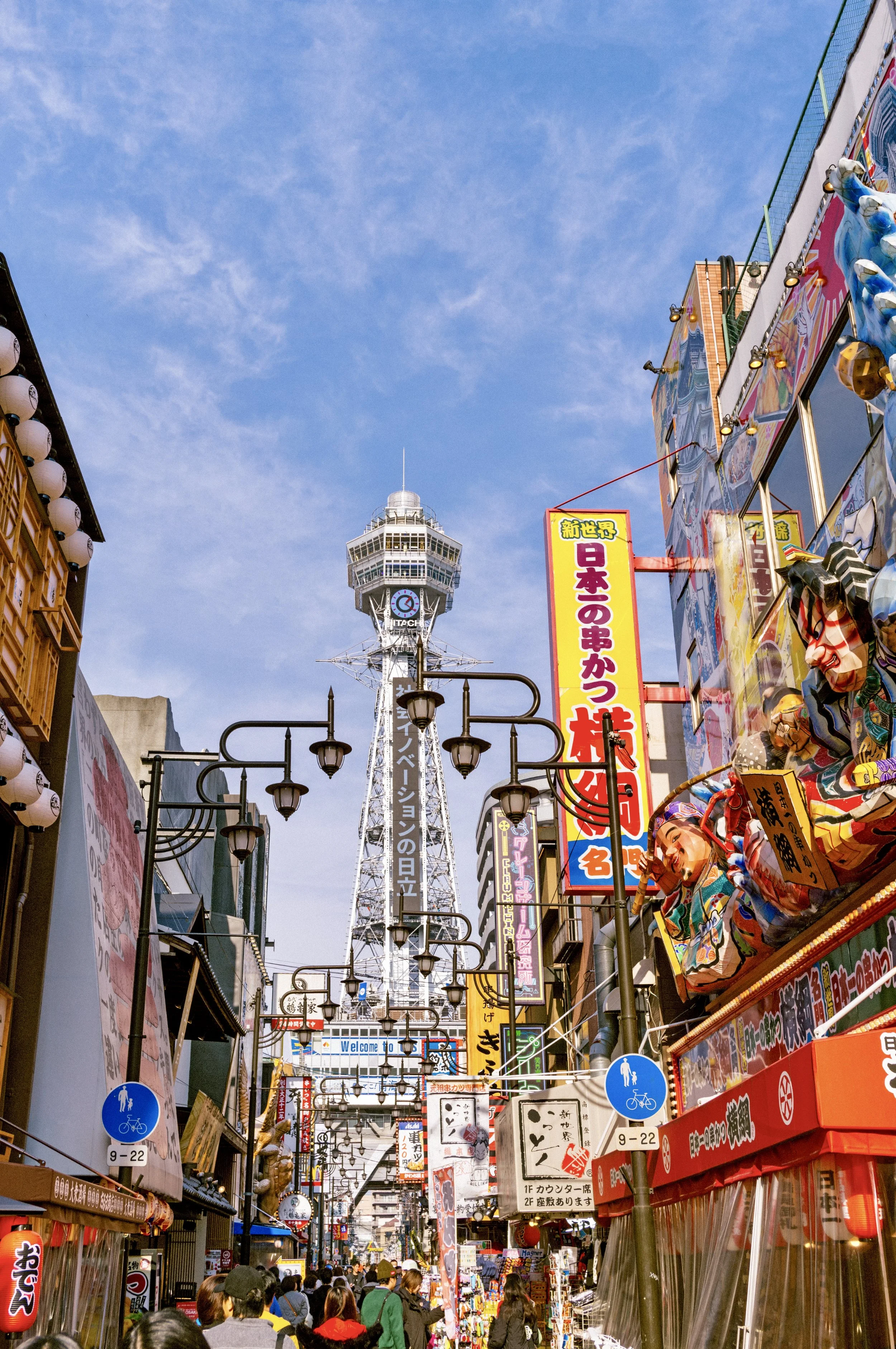
Tsutenkaku Tower from the Shinsekai area
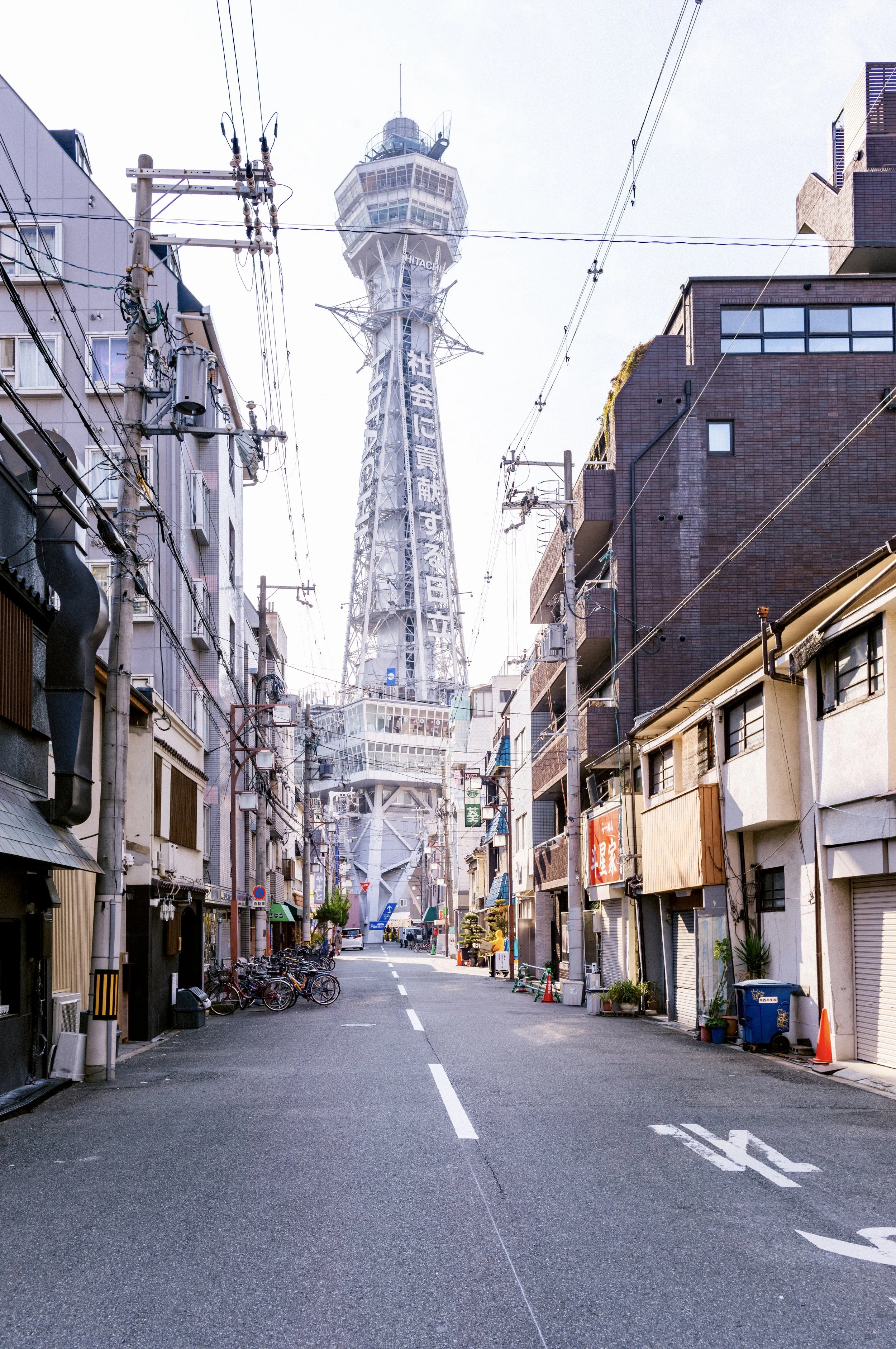
Tsutenkaku Tower
Wandering past Tsutenkaku Tower and the surrounding Shinsekai Market Street felt like stepping into a slice of old-school Osaka, colourful, messy, somewhere that hasn’t tried to polish itself up too much, and that’s exactly why I loved it.
The iconic Tsutenkaku tower itself rises out of the neighbourhood like a retro beacon. I didn’t have time to go up into the tower as I was on a tour that went to the Market for sake tasting before heading to Dōtonbori. But something you can do If you are looking for some fun then you need to take the Tower Slider which lets you zoom down a 60-metre slide from the third floor of the tower to the basement in about 10 seconds! Next time I am in Osaka this is on my to do list!
If you visit Janjan Yokocho make sure you also take a stroll around Shinsekai. Shinsekai is a little rough-around-the-edges, very colourful and is full of food stalls, tiny bars, and signs stacked on top of each other. There is a lot going on so it’s a great sport for some street photography if you have a spare hour or so.
I had a good walk through the market and ended up sampling some sake, three different bottles poured into little glasses, each with its own personality. One was smooth and clean, another a touch richer and more rounded, and the third much sweeter than the others, this was my favourite (see the image below).
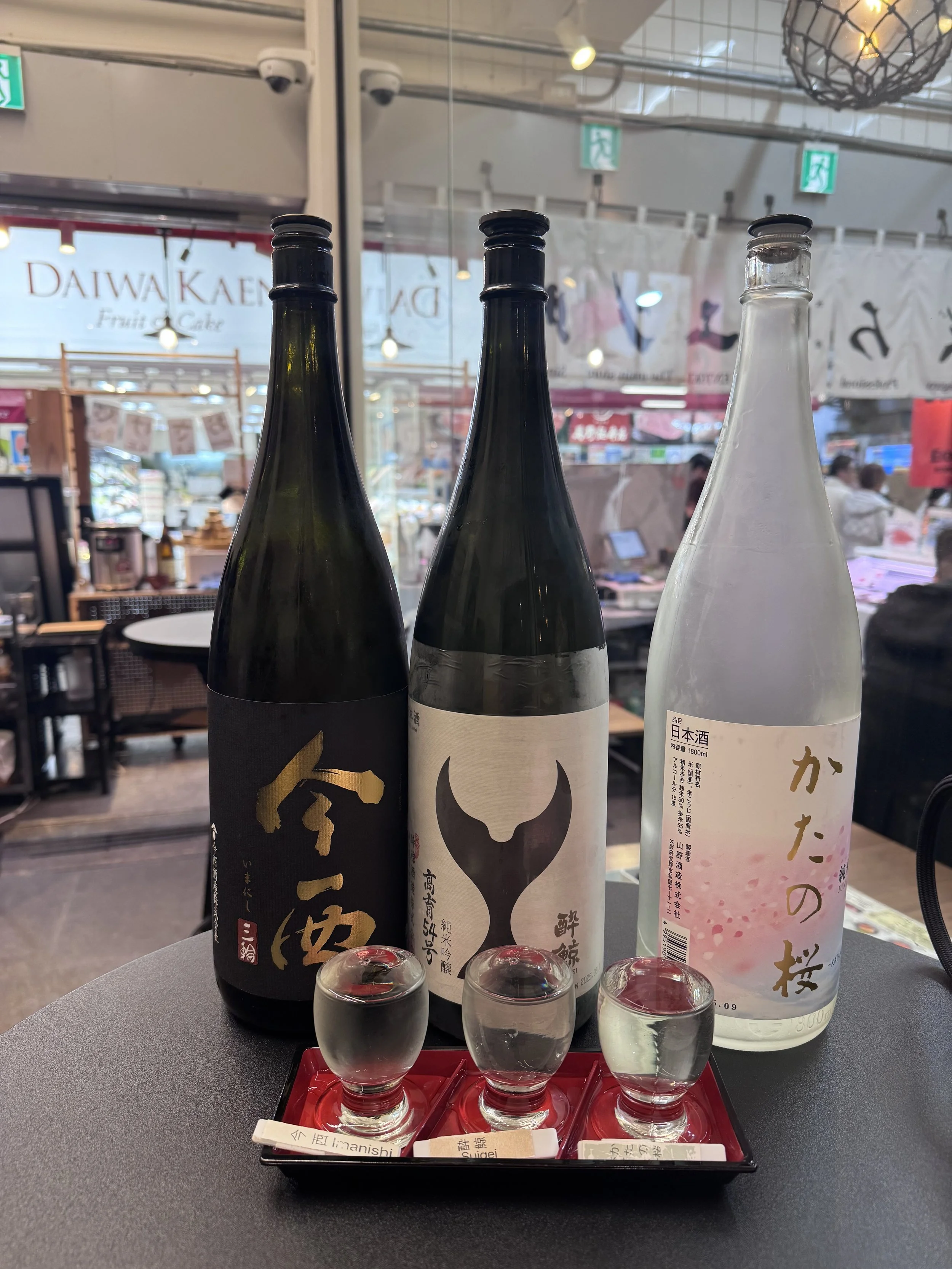
Sake Tasting
Each glass different, from crisp and clean, richer and more rounded to gently sweet.
Namba Yasaka Jinja – The Lion Head Shrine
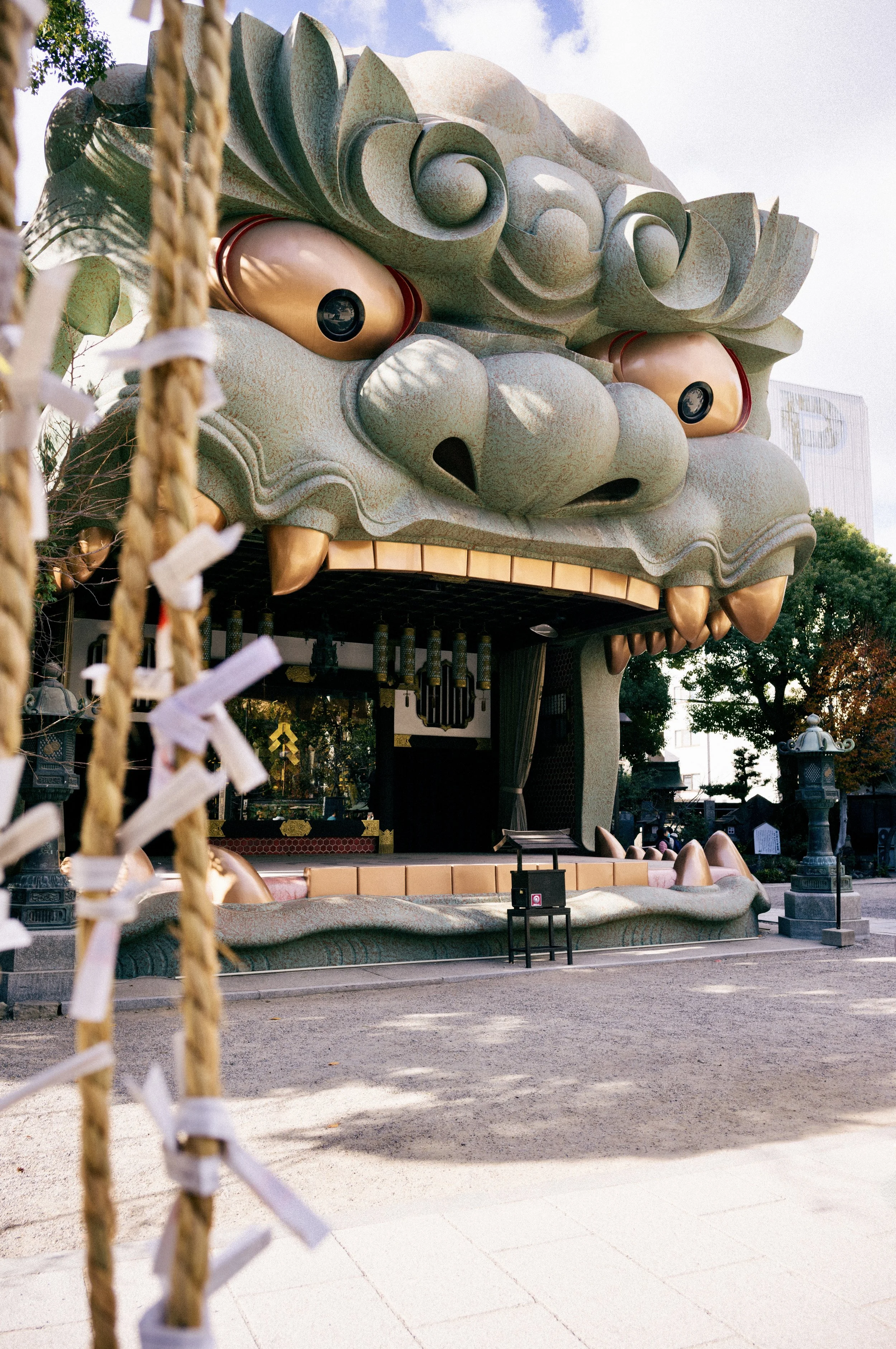
Namba Yasaka Jinja
Namba Yasaka Jinja is famous for its enormous lion-head stage, believed to swallow bad luck and bring good fortune, and it's one of the more visually striking shrines I visited in Japan, partly because of the lion itself and partly because of the contrast with the modern office buildings rising directly behind it. That urban context is the shot most people don't take. Everyone photographs the lion head straight on, which is the obvious frame. What's more interesting is pulling back on the 28mm to include the buildings behind the ancient and the modern compressed into one frame.
It says something about Japan that a more zoomed-in image doesn't. The omikuji paper fortunes tied to ropes around the shrine grounds catch the light beautifully in the afternoon, small, precise, quietly photogenic in a way that doesn't announce itself until you slow down enough to notice.
Stepping inside the shrine you will hear and feel the crunch of gravel, the gentle rustle of paper fortunes in the breeze, and the stillness around the lion’s face create a pause from the city. This isn’t a shrine hidden deep in nature; it exists right in the middle of everyday life, yet feels completely separate from it.
What caught my attention here were the omikuji, the small paper fortune slips tied carefully to ropes and branches around the shrine (you can see this in the picture above). After drawing a fortune, visitors read their message for the year ahead. Good fortunes are often kept as a reminder, while bad or uncertain ones are tied up onsite, symbolically leaving misfortune behind and allowing the gods to take care of it.
It is open all year round and is free to enter.
Address: 2-9-19 Motomachi, Naniwa-ku, Osaka, 556-0016, Japan
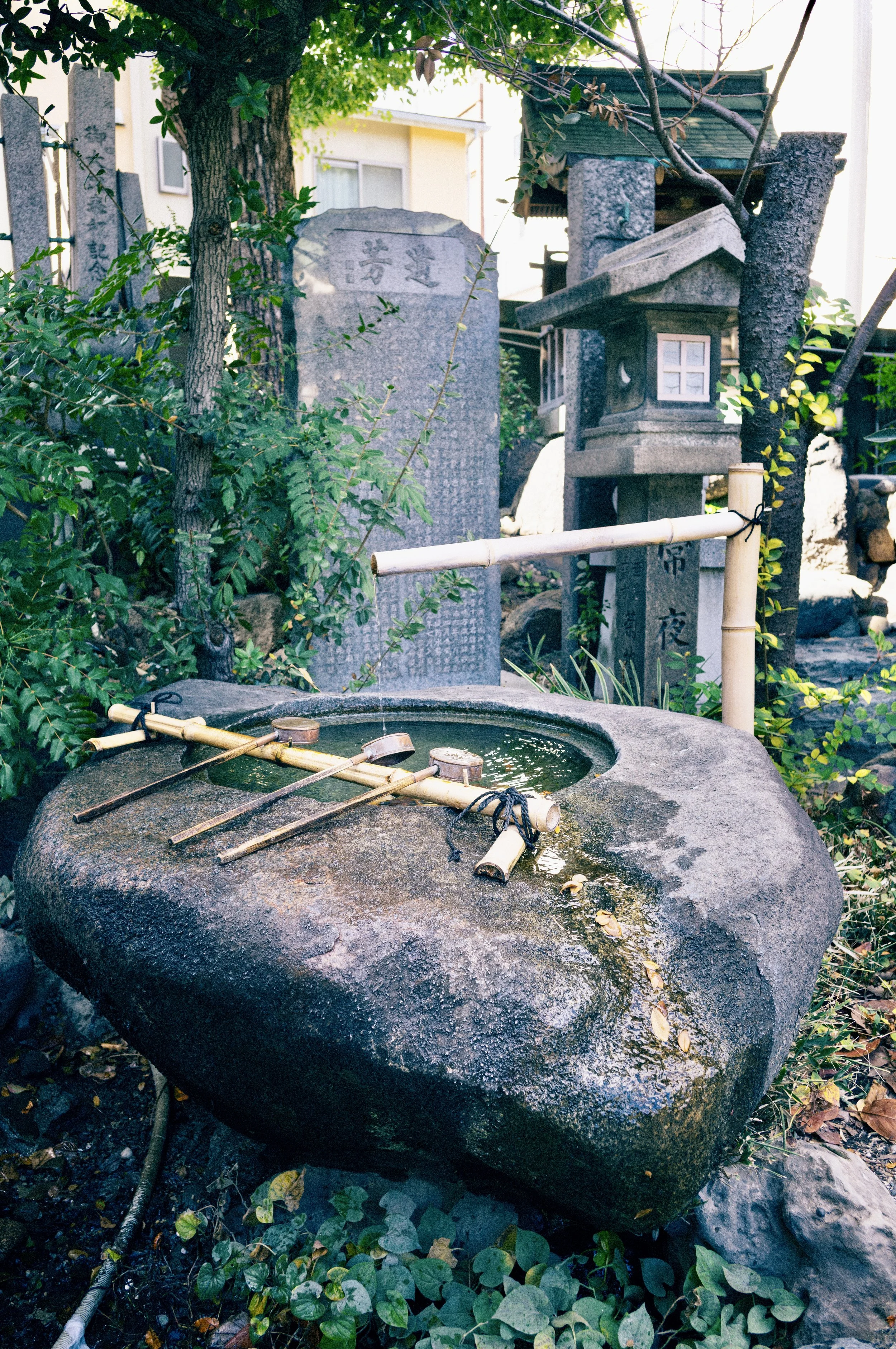
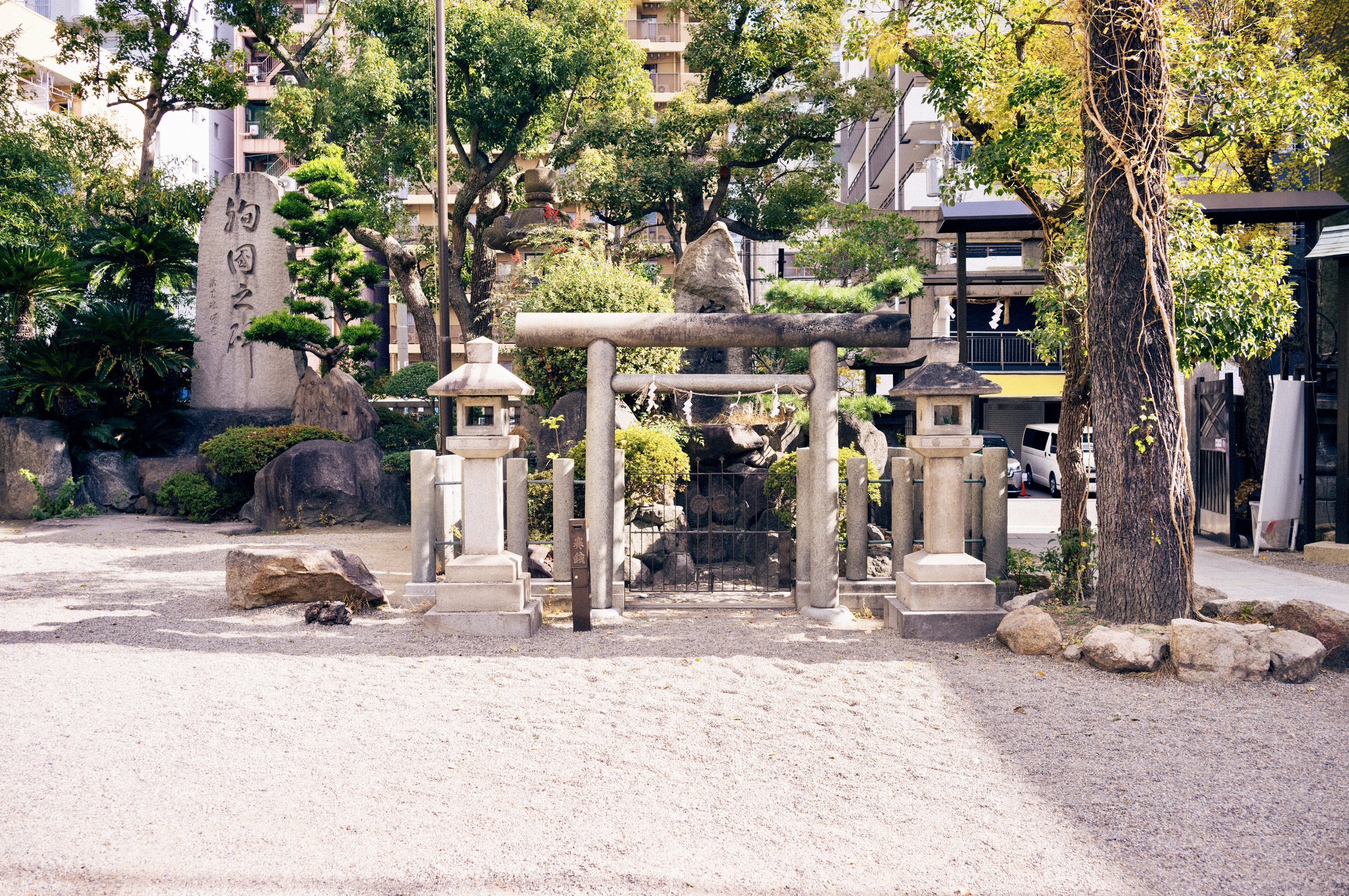
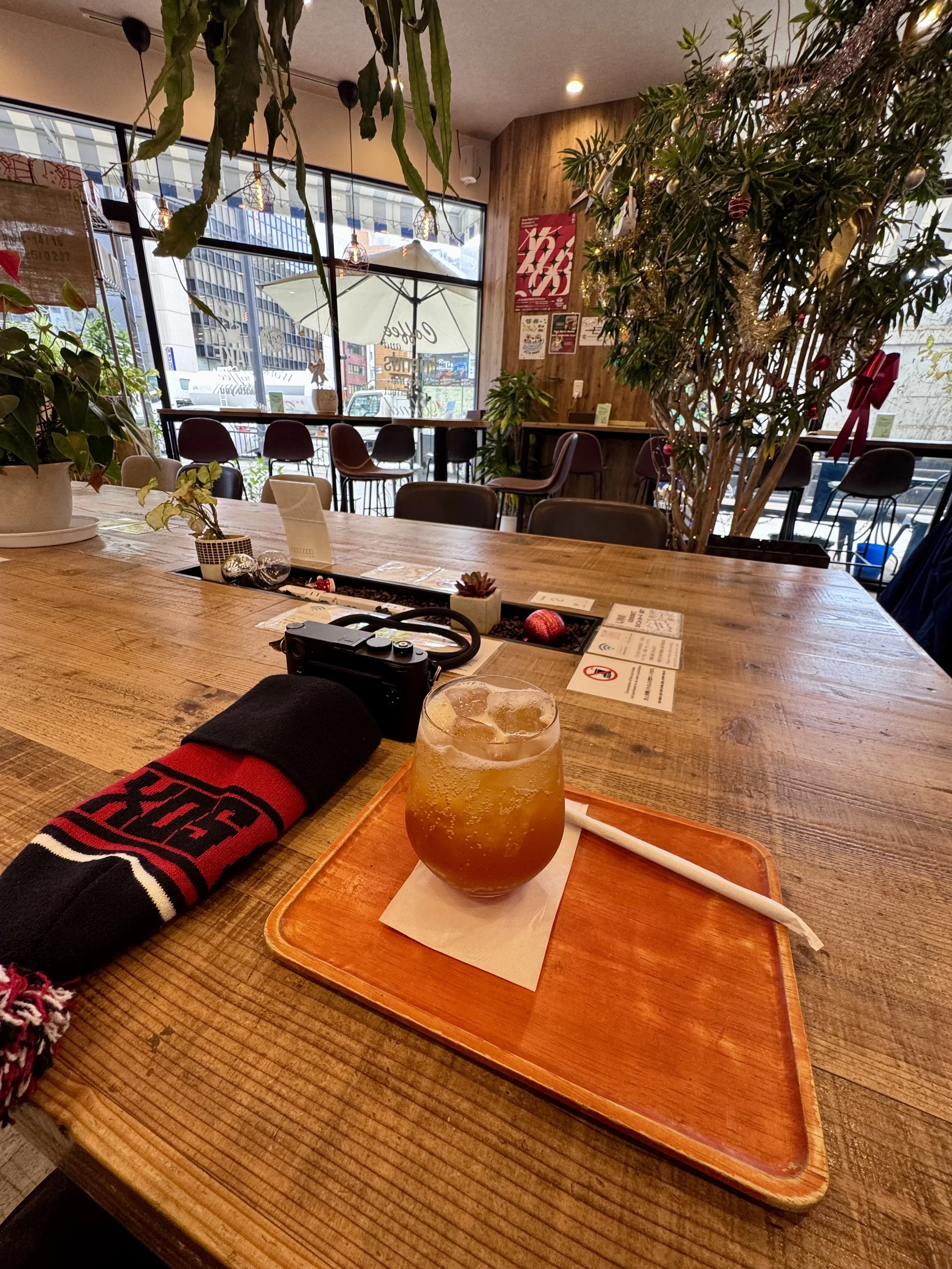
After leaving Namba Yasaka Jinja I was in need of a drink and some warmth as it was a little cold which was hitting my chest. I saw a cool little cafe across the street called Cora Coffee, which reminded me of Flat White in Durham with all the green plants.
The staff were very helpful and spoke in English to me to explain the menu. I had a great ginger ale and BLT sandwich and with free wifi I was able to send some bigger size pictures back home and surf the net looking at places to go without using my data allowance on my e-sim.
In fact I had two ginger ales, as I took an hour to recharge and enjoy the food before heading to the train station to go to Kyoto.
Japan, 556-0016 Osaka, Naniwa Ward, Motomachi, 1 Chome-11-8, Osaka Osaka Prefecture
Final Thoughts – Is Osaka Worth Visiting?
Osaka is loud, intense, delicious, and full of character. If you love food, street photography, and cities that never seem to sleep, Osaka absolutely deserves a place on your Japan itinerary.
The food alone is reason enough to visit, and everything I ate in Osaka was unreal, and it’s easy to see why people call it the nation’s kitchen. The takoyaki (octopus balls) were probably my favourite, but the dumplings and everything else I tried were just as good. If you’re even slightly into food, Osaka needs to be on your list.
Come to Osaka hungry, wander Dōtonbori without a strict plan, and follow the smells and you will have a great experience especially if you plan on trying the food.
Then make time to enjoy the quiet.
Osaka Castle and Shitennō-ji temple were also a real highlight and well worth the trip. Osaka Castle sits among parkland and surrounded by water, it offers a slower, more reflective side of the city, and it felt like a good counterbalance to the energy of places like Dōtonbori. If you love history then you will get loads of insight on the samurai during the Edo period and before.
Osaka in One Night and One Day — How I'd Do It:
Evening arrival: Walk straight to Dōtonbori. Gyoza from Osaka Ohsho (¥220 for six), takoyaki from Takoyaki Wanaka (¥600 for eight). Get your camera out and shoot the food stall shopfronts, give yourself an hour on that one street. Then find the canal reflection of the Glico Running Man at water level rather than from the bridge.
Day: Osaka Castle at opening, find the reflection pond south-east of the main keep. Shitennō-ji in the afternoon. Namba Yasaka Jinja, shoot the lion head then off to. Tsutenkaku and Shinsekai for the retro Osaka streets.
Food tour: Book the Dōtonbori food tour on Get Your Guide before you leave home. Ask for mamezakana. It was the best meal I had in Japan.
Kit note: The 28mm lens was right for Osaka. The city is busy and the 28mm keeps you quick and unobtrusive, with plenty in to crop if needed. If I went back I'd have the Pocket 3 running all evening in Dōtonbori, I underused it here and regret it.
If you’ve already experienced Osaka, I’d love to hear what you enjoyed the most? and if you’re dreaming up a trip, feel free to drop a question or say hello, i’m always happy to share favourite routes, memorable eats, and the places I’d return to without hesitation.
You can dive into my other travel guides from my Japan Trip covering Tokyo, Hiroshima, Kyoto and Things to Know Before Travelling to Japan.